

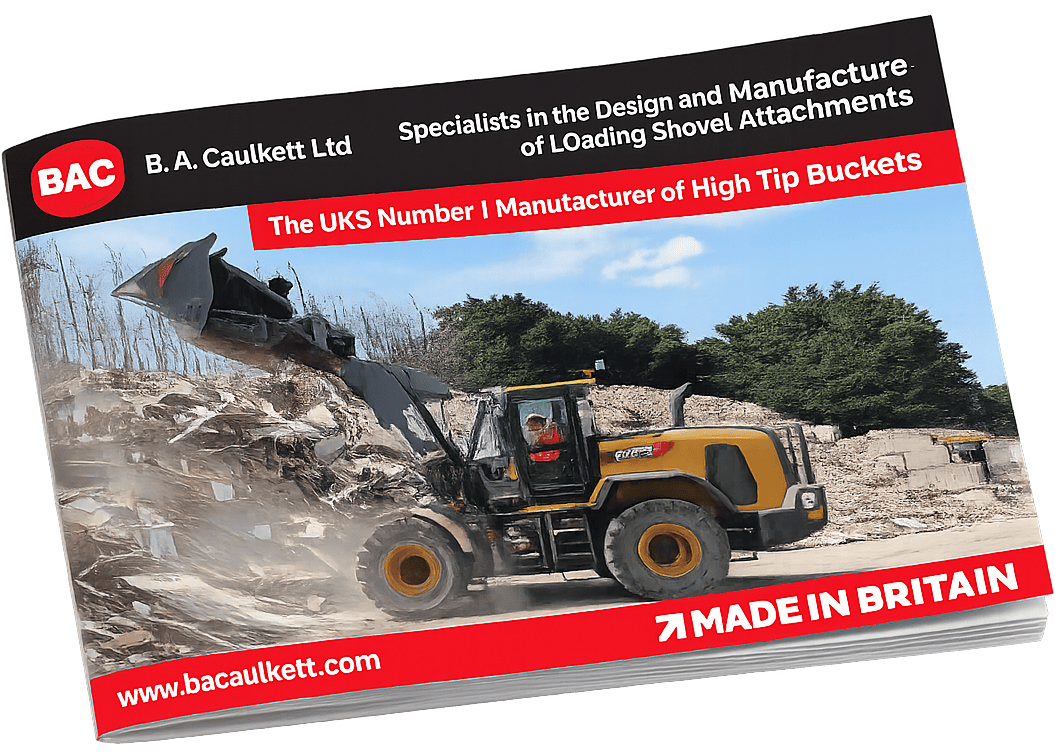
In addition tailor made new loading shovel attachments, we have a great selection of second hand and used high tip buckets. Please continue reading, for more information.
What Are the Benefits of Buying Second Hand from B. A. Caulkett?
In short, you get a great deal on high quality equipment, including use high tip buckets.
We design and produce loading shovel attachments for some of the most recognisable names in the industry. These items are available at bargain bucket prices when bought second hand directly from us.
Why Buy Second Hand Products from B. A. Caulkett?
Once we obtain second hand B. A. Caulkett loading shovel attachments, we thoroughly assess the equipment.
The only items that we make available for resale are those that meet our extremely high quality control standards. So by buying second hand products directly from us, you can be certain that you are getting a great quality item from a trusted supplier.
Used B. A. Caulkett products are capable of providing many years of reliable service and we will offer assistance in the unlikely event that your item develops a fault to ensure a fair resolution is reached.
What Are Second Hand High Tip Buckets Used For?
Exactly the same with brand new counterparts, second hand high tip buckets are versatile loading attachments that can be used in a range of applications across a spectrum of industries, including construction and agriculture.
Because they are high lift, they can facilitate extra tipping height compared to regular alternatives. As such they can be used with high sided vehicles such as walking floor trailers and hoppers. This is a factor that can help to improve efficiency and productivity.

Please call 01440 706429
Key Technical Considerations
- Has the main body been checked for stress fractures around the hinge points?
- Are there any cracks around the pivot bosses or ram mounting brackets?
- Has the bucket been welded previously?
- If repaired, was it professionally repaired using the correct welding procedures?
- Are there signs of distortion or twisting in the chassis?
Why does it matter?
Structural cracks can rapidly worsen under heavy loading.
Poor-quality repairs can reduce the attachment’s safe working life.
Identifying fatigue early avoids expensive failures and downtime.
The pivot assembly is one of the highest wear areas on any used high tip bucket.
Key Technical Considerations
- Is there excessive movement between the pins and bushes?
- Have the pins and bushes recently been replaced?
- Is there oval wear in the pivot housings?
- Are grease points functioning correctly?
- Does the bucket tip smoothly throughout its full range?
Why does it matter?
Worn pins create poor bucket alignment.
Excessive play increases stress on the hydraulic cylinders.
Replacing worn pivot components early prevents damage to the bucket frame.
A used high tip bucket relies entirely on its hydraulic system for safe tipping.
Key Technical Considerations
- Are the hydraulic rams leaking?
- Is there pitting or corrosion on the chrome ram rods?
- Have the cylinder seals been replaced?
- Are hydraulic hoses free from cracking or abrasion?
- Have quick-release couplings been inspected for wear or leakage?
Why does it matter?
Hydraulic leaks reduce lifting performance.
Damaged ram rods quickly destroy cylinder seals.
Hose failures can lead to unplanned downtime and safety risks.
Many used buckets change machines several times during their working life.
Key Technical Considerations
- Which loader was the bucket originally built for?
- What is the bucket’s rated capacity?
- What hydraulic pressure and oil flow does it require?
- What type of mounting brackets are fitted?
- Can the brackets be changed if required?
Why does it matter?
Incorrect bracket geometry causes poor machine fitment.
Insufficient hydraulic flow can reduce tipping performance.
Oversized buckets may exceed the machine’s safe lifting capacity.
The overall wear level provides a good indication of the attachment’s remaining working life.
Key Technical Considerations
- How much material remains on the cutting edge?
- Are the side plates heavily worn?
- Is the bucket floor becoming thin?
- Are heel plates or wear strips still serviceable?
- Has the bucket been used in abrasive materials such as aggregates or recycling waste?
Why does it matter?
Excessive wear reduces bucket strength.
Thin floors are expensive to replace.
Understanding previous applications helps estimate the attachment’s remaining lifespan.
