Skip to content
+44 (0) 1440 706 429 sales@bacaulkett.com

Loading Shovel Attachments for Ports & Terminals

At B. A. Caulkett, we understand the unique challenges faced by businesses operating within Ports.

DESIGNED TO HANDLE

AGRI, MINERAL, CONSTRUCTION, ENERGY & INDUSTRIAL

BULK MATERIALS

VERSATILE TO MANAGE

ALL TYPES OF LOOSE BULK

INCREASING OPERATIONAL EFFICIENCY

MANUFACTURED FOR

DECREASED DOWNTIME, INCREASED SAFETY

IMPROVED PRODUCTIVITY

DESIGNED TO HANDLE
AGRI, MINERAL, CONSTRUCTION, ENERGY & INDUSTRIAL
BULK MATERIALS

VERSATILE TO MANAGE
ALL TYPES OF LOOSE BULK
INCREASING OPPERATIONAL EFFICIENCY

MANUFACTURED FOR
DECREASED DOWNTIME, INCREASED SAFETY
IMPROVED PRODUCTIVITY

Click here to see videos of B. A. Caulkett loading shovel attachments in action.

Loading Shovel Attachments for Ports & Terminals

At B. A. Caulkett, we understand the unique challenges faced by businesses operating within Ports & Terminals.

Whether you’re handling high volumes of agricultural (Agri bulk) , mineral, construction, energy or industrial materials, efficiency, durability, and performance are key.

Our industry-proven range of attachments are built to thrive in demanding environments, helping you move more material with less downtime.

Specialist Attachments for Demanding Work

We supply a wide selection of robust, high-quality buckets and attachments, designed specifically for use on wheel loaders working on ports and terminals throughout the UK.

Our solutions are trusted by operators nationwide to improve site productivity, safety, and machine utilisation.

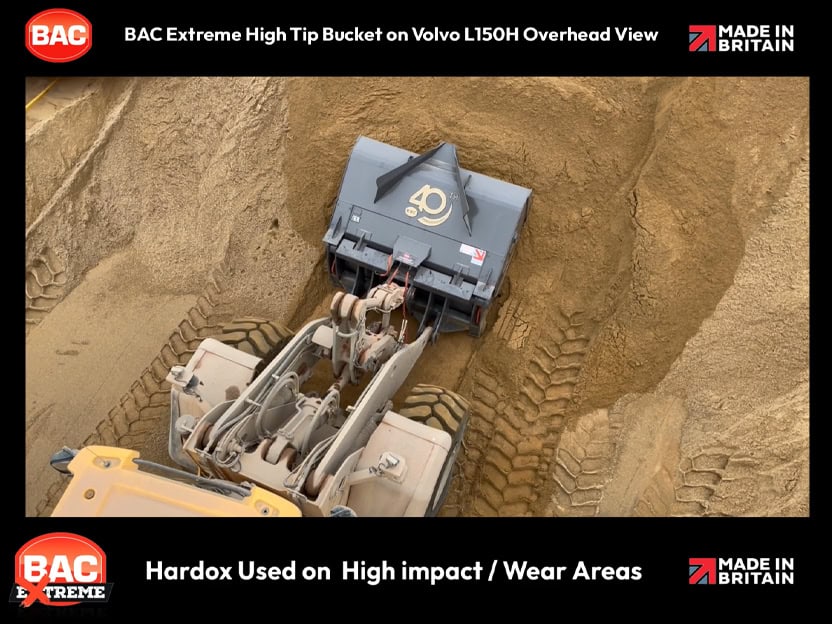
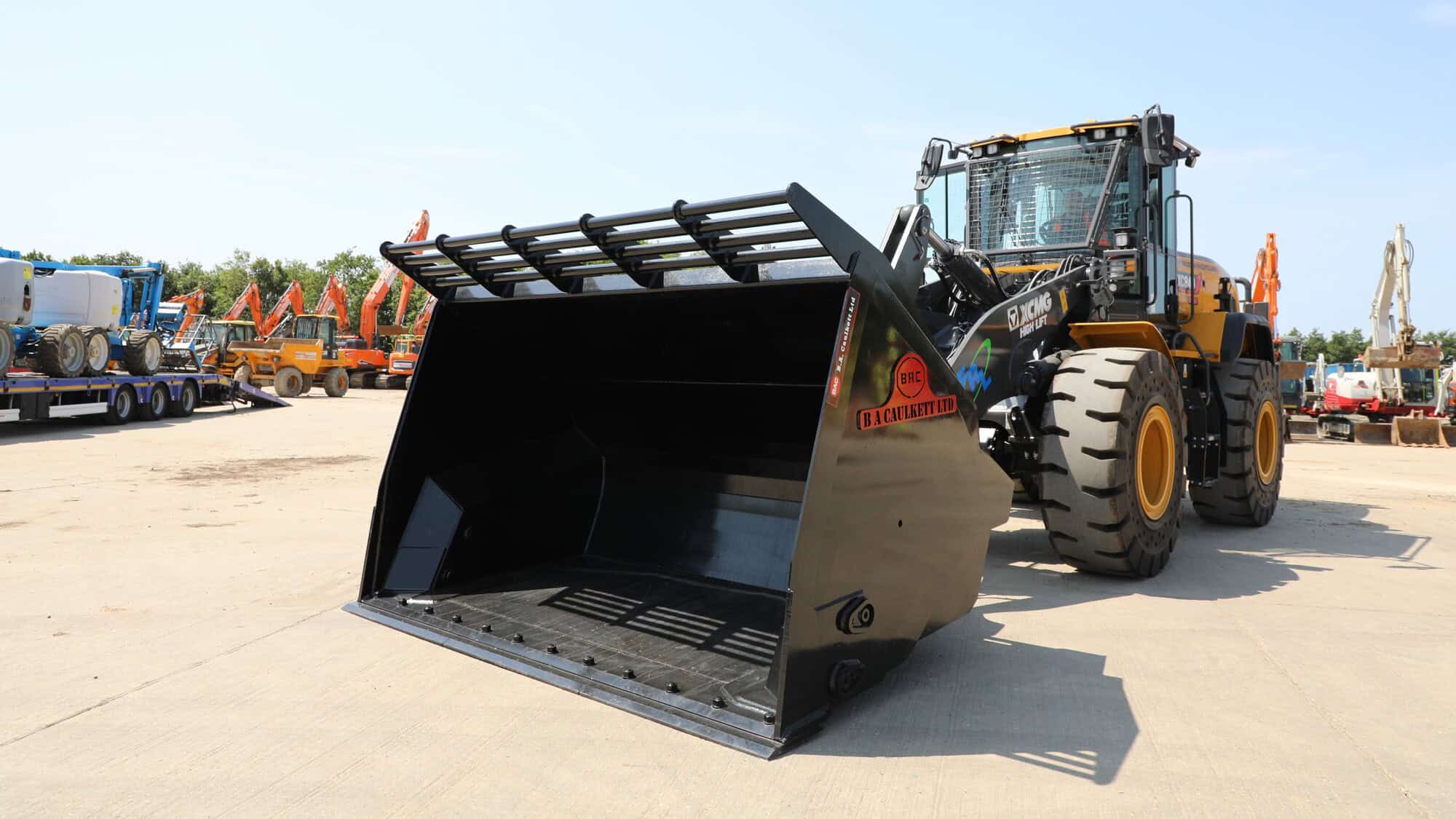
We Have High Tip Buckets Available For Hire. Sizes From 2.5m³ to 6m³

Find Out More

High Tip Buckets for Port & Terminal Applications

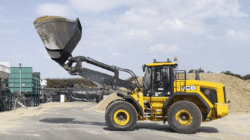
High Tip Buckets are a specialist attachment designed to meet the height and material-handling challenges commonly found in port and terminal operations. These buckets feature an extended tipping mechanism that allows for significantly higher discharge height than standard GP buckets, without increasing machine size or compromising stability.

In ports and terminals, machines often need to load bulky materials such as plastics, paper, and green waste into tall trailers, hoppers, or compactors. Traditional GP buckets can fall short in these settings, requiring the use of ramps or additional lifting machinery. High Tip Buckets eliminate that need, offering a more efficient and safer method of discharge.
Technical Benefits of High Tip Buckets in Ports & Terminal Environments

Increased Dump Height: The core advantage of a high tip bucket is the ability to reach higher discharge points. This is particularly beneficial when loading or heaping materials

Optimised for Low-Density Material: High tip buckets typically have greater volumetric capacity, making them ideal for handling lighter, high-volume materials like grains.

Improved Site Efficiency: By removing the need for ramps or double-handling, high tip buckets streamline the workflow, reduce fuel consumption, and allow faster vehicle turnaround times.

Hydraulic Tipping Mechanism: The integrated hydraulic tipping frame enables precise, stable control of bucket movement, ensuring clean discharges with minimal spillage. This is crucial in busy high volume ports.

Enhanced Safety: The design minimises the need to operate on inclines or unstable surfaces, which are common hazards when using GP buckets to reach higher loads. This reduces machine stress and improves operator safety.

Custom Build Options: High tip buckets can be tailored to the specific material densities, machine sizes, and discharge heights required by the ports operation, this helps in improving overall performance and lifecycle value.

Contact Info

Quick Links

High Tip Buckets General Purpose Buckets Pusher Blades Quick Hitch Brackets

Refurbishment

Got a bucket that needs is worn out. Our refurbishment service we can extend bucket life at the fraction of a cost of a new bucket

Find Out More

Loading Shovel Attachments for Port & Terminals

BAC Wheel Loader Attachments Compatible with Major Wheel Loader Brands

Our attachments are built for seamless integration with equipment from leading manufacturers, including:

Whatever make or model you run, we can match your attachment to ensure peak performance and durability.

Case G Series Evolution Wheel Loaders – 521G, 621G, 651G, 721G, 821G, 921G, 1021G, 1121G

Hitachi Wheel Loader – ZW160, ZW180, ZW220, ZW250, ZW310

Liebherr Stereoloaders – L514, L518
Liebherr Wheel Loaders – L526, L538, L546, L550, L556, L566, L576, L580, L586

Cat Compact Wheel Loaders 914, 920
Cat Small Wheel Loaders 926, 930, 938
Cat Medium Wheel Loaders 950, 962, 966, 972, 980

Hyundai Wheel Loader – HL930, HL940, HL955, HL960, HL970, HL975, HL980, HL985

LiuGong Wheel Loaders – 835H,848H, 856H, 877H, 890H

Claas Torion Wheel Loaders 1611P, 1611, 1285, 2014, 1913, 956

JCB Wheel Loader – 411, 413, 417, 419, 427, 437, 457

Volvo Compact Wheel Loader – L45, L50
Volvo Large Wheel Loader – L60, L70, L90, L110, L120, L150, L180, L220

Develon Wheel Loaders – DL200, DL220, DL250, DL280, DL320, DL380, DL420, DL480, DL550, DL580

Komatsu Wheel Loaders – WA170, WA200, WA270, WA320, WA380, WA470, WA475, WA480, WA485, WA500

XCMG Wheel Loaders – XC938, XC948F, XC958E, XC968EV, XC968E, XC978U, XC998
3 year maintenance plan from BA Caulkett

Ports and Terminals Loose Bulk Materials

In ports, loose bulk materials (often called dry bulk cargoes) are a major category of goods handled. These are unpackaged, granular, or particulate materials that are moved in large quantities. Ports often have specialised terminals, equipment, and storage facilities to handle them efficiently.

Here’s a structured breakdown of the main categories and examples:

1. Agricultural Bulk (Agri-bulk)

Handled at agri-terminals with silos, conveyor belts, and grain elevators.

  • Cereals & grains – wheat, maize (corn), barley, rice, oats, sorghum
  • Oilseeds & derivatives – soybeans, rapeseed, sunflower seeds, canola
  • Animal feed – soybean meal, fishmeal, DDGS (dried distillers’ grains with solubles)
  • Sugar (raw or refined)
  • Fertiliser products – urea, potash, phosphates, ammonium nitrate

2. Mineral Bulk

These require heavy-duty handling gear such as grab cranes, hoppers, and conveyor systems.

  • Coal (thermal coal for power plants, coking coal for steel industry)
  • Iron ore
  • Bauxite (for aluminium production)
  • Phosphates
  • Limestone
  • Gypsum
  • Salt

3. Construction Materials

Often destined for infrastructure and building projects.

  • Cement & clinker
  • Sand & aggregates
  • Gravel & crushed stone
  • Slag (a steelmaking by-product used in construction)

4. Energy & Industrial Materials

Sometimes handled at dry bulk berths separate from liquid bulk (like crude oil).

  • Biomass (wood pellets, wood chips)
  • Petroleum coke (petcoke)
  • Sulphur (granular or prilled)

5. Specialised Bulks

These need stricter handling due to dust or contamination risks.

  • Chemicals in solid form (soda ash, caustic soda flakes, ammonium sulphate)
  • Scrap metal (sometimes treated as bulk if loose-loaded)

Ports handle everything from food staples (grain, sugar, fertiliser) to heavy industrial inputs (coal, ores, cement) and energy-related bulks (biomass, petcoke).

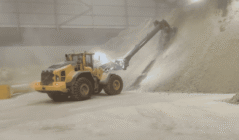
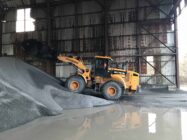
ports and terminals wheel loader attachment ba caulkett
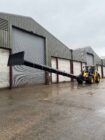
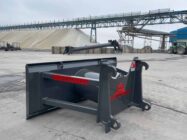
ports and terminals BAC High Tip Bucket
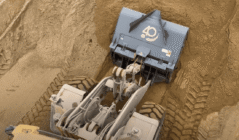
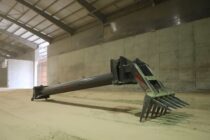
BA Caulket Rake Pusher in storage area front on

Common Applications of Loading Shovel Attachments in Ports & Terminals

In ports and terminals, wheel loaders are essential for handling loose bulk cargo, supporting ship loading/unloading, stockpile management, and terminal operations.
Their effectiveness is greatly enhanced by attachments designed for specific cargo types and operational needs.

Below is a detailed breakdown of typical wheel loader attachments used in ports and what they’re for:

1. General & High-Capacity Buckets

Purpose: Bulk material handling – scooping, carrying, loading into hoppers, trucks, or conveyors.

Standard/general-purpose bucket – for mixed bulk cargo (gravel, ores, coal).
High-capacity/light material bucket – large-volume bucket for low-density cargo like biomass, woodchips, grain, fertiliser.
Rock bucket – reinforced edges and teeth for heavy, abrasive materials like bauxite or iron ore.
Coal bucket – designed for high volume and low-density coal, often with spill guards.

2. Clamshell Buckets / Grabs

Purpose: For materials that need precision or reduced spillage during transfer.

Hydraulic clamshell grab – for loose, free-flowing cargo like grain, sand, or aggregate, often used to load hoppers directly.
Orange-peel grab – for coarse or irregular materials like scrap metal, wood waste.

3. Fork Attachments

Purpose: For handling packaged or unitised cargo that comes in ports alongside bulk.

Pallet forks – moving palletised goods (bags of fertiliser, cement, big bags of grain).
Log forks – for timber/forestry products when handled in multipurpose terminals.
Pipe/pole forks – used in terminals dealing with long cylindrical cargo.

4. Pushers & Dozer Blades

Purpose: Clearing and managing stockpiles, levelling material, pushing cargo into hoppers.

Dozer blade – for spreading bulk cargo in stockyards or pushing spillage back into piles.
Coal pusher – designed with spill guards for coal or similar materials.

5. Sweepers & Brooms

Purpose: Port hygiene, environmental compliance, dust control.

Angle broom – clearing dust and loose cargo from paved terminal areas.
Vacuum sweeper attachment – collecting fine dust (grain dust, cement, fertiliser residues) to prevent pollution.
Water spraying broom – dust suppression during sweeping.

6. Specialised Handling Tools

Purpose: Unique materials or special operations in ports.

Hopper feeding buckets – shaped for direct discharge into shiploaders or mobile hoppers.
High-tip bucket – for tipping light bulk into tall hoppers/trailers.
Side-dump bucket – for unloading to the side in narrow spaces (useful under conveyors).
Snow blade/bucket – in cold-weather ports to clear snow from working areas.

Why wheel loader attachments matter in ports:

Ports handle a wide variety of cargo densities, abrasiveness levels, and environmental requirements, so attachments must match material type to maximise productivity and minimise cargo loss or contamination.

Bolt-on cutting edges or teeth for improved wear life when handling highly abrasive materials
Heavy-duty build specifications, including extra side reinforcement and thicker base plates
Quick couplers to allow rapid switching between GP and specialist attachments (such as high tip buckets or grapples)
Back To Top