

If you are looking for a great deal on a high tip bucket second hand, B. A. Caulkett can help. We offer a great selection of high quality used loading shovel attachments, including high tip buckets. Continue reading to find out more.
Are B. A. Caulkett Second Hand High Tip Buckets Durable?
Absolutely.
All of our products are built to last using only the highest quality materials. They are designed to thrive in the toughest industries, including agriculture and construction.
Moreover, our high tip buckets feature bolt on reversable wear edges and bolt on heel plates. These are easy to replace and protect the product from mechanical abrasion, thereby extending its product life.
Once we obtain second hand B. A. Caulkett products, we assess it and only sell it on if it meets our extremely high quality standards. This helps to ensure that even our used products are able to provide customers with many years of reliable service.
And because the products are second hand, they are available for less money than new equivalents, offering our customers the chance to secure a great deal.

Please call 01440 706429
What Other Second Hand Products Do You Have Available?
We regularly have a great range of second hand products available in stock. This includes, buckets, forks and blades.
For more information on the products we have available and specific specifications on a particular item, please don’t hesitate to get in touch.
Who Are B. A. Caulkett?
Based in Suffolk, we are an experienced company that specialises in the design and manufacture of a complete range of loading shovel attachments. We supply some of the biggest brands in the industry and are known for our high quality products.
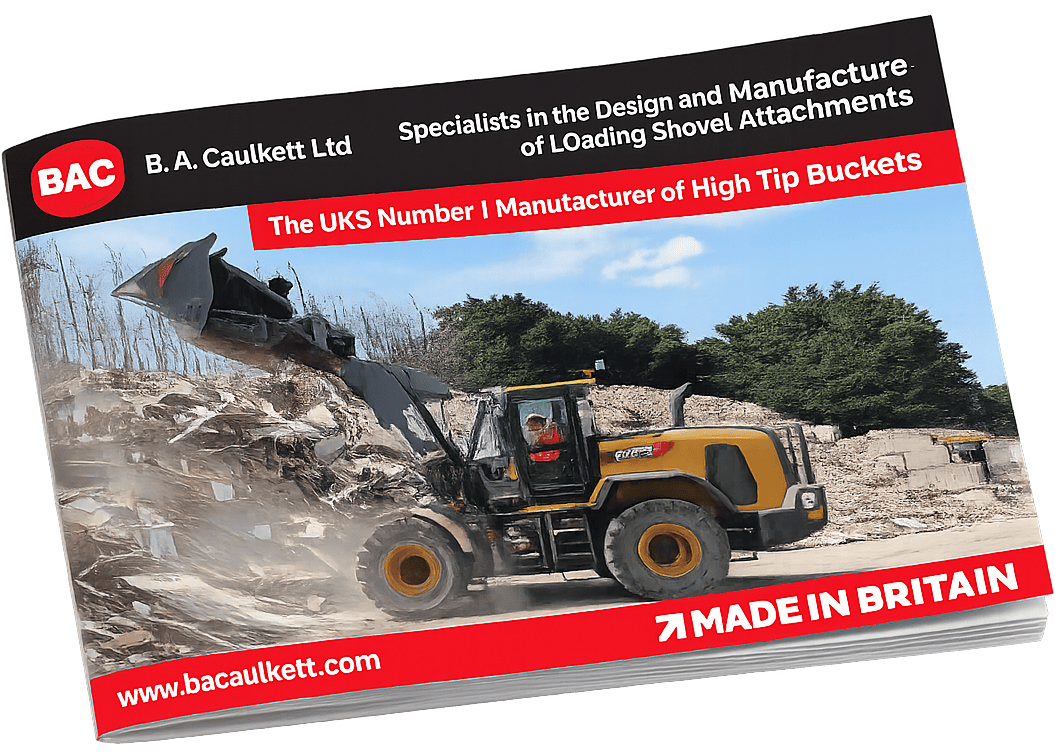
A used high tip bucket experiences high stresses during loading, transport and tipping, making its structural condition the first priority when assessing the attachment.
Key Technical Considerations
- Inspection of the main bucket shell for distortion or cracking
- Examination of all welds, particularly around hinge brackets and pivot points
- Wear or elongation of pivot pin holes
- Inspection of the headstock/frame for twisting
- Condition of wear strips, floor plate and cutting edge
- Evidence of previous repairs or reinforcement
Why does it matter?
Structural fatigue may not be immediately visible but can significantly reduce the attachment’s service life.
Cracks around pivot areas can rapidly worsen under heavy loading.
A documented structural inspection provides confidence that the attachment is safe to operate.
The tipping system is the most complex part of a high tip bucket and is typically where wear develops first.
Key Technical Considerations
- Wear measurements on pivot pins and bushes
- Hydraulic ram condition and chrome rod quality
- Oil leaks from cylinder seals
- Wear within linkage joints
- Smooth tipping action throughout the complete tipping cycle
- End-stop condition and alignment
Why does it matter?
Excessive play reduces tipping accuracy and increases stress on the bucket structure.
Worn pins and bushes accelerate wear throughout the entire tipping mechanism.
Replacing hydraulic cylinders and pivot assemblies can represent a significant proportion of the purchase cost.
Compatibility involves much more than simply fitting the correct mounting brackets.
Key Technical Considerations
- Machine operating weight
- Safe Working Load (SWL)
- Hydraulic oil flow and operating pressure
- Loader breakout force
- Lift height
- Bucket weight
- Bucket capacity
- Correct mounting brackets (Euro, JCB Q-Fit, Volvo, Manitou, Merlo, Quick Hitch, etc.)
- Hydraulic hose connections
Why does it matter?
An oversized bucket can reduce machine stability and compromise safe operation.
Incorrect hydraulic specifications can result in slow or incomplete tipping performance.
Proper machine matching maximises productivity while maintaining safe operating limits.
Wear components provide one of the best indications of the attachment’s remaining working life.
Key Technical Considerations
- Remaining cutting edge thickness
- Floor plate wear percentage
- Side wear plate condition
- Heel plate wear
- Internal bucket floor condition
- Evidence of abrasive wear from previous applications such as aggregates or recycling
Why does it matter?
Buckets previously used for stone or demolition waste generally experience significantly higher wear than those handling grain or biomass.
Knowing the remaining wear life helps estimate future maintenance and refurbishment costs.
Good wear protection can significantly extend the working life of the bucket.
The previous application often tells an experienced buyer more about the attachment than its age alone.
Key Technical Considerations
- Previous industry (agriculture, waste, recycling, quarrying, biomass, ports)
- Type of material previously handled
- Hours or years of operation (where known)
- Maintenance records
- Replacement history of pins, bushes and cylinders
- Previous refurbishment work
- Storage conditions
Why does it matter?
A bucket used for woodchip or grain will generally experience much less structural wear than one used in quarrying or scrap handling.
A documented service history provides evidence of preventative maintenance and component replacement.
Understanding previous applications allows buyers to assess the attachment’s expected remaining lifespan more accurately.
