

Selecting a Bucket
In previous posts we have looked at material densities and bucket fill factors. Bucket volume alone is not an adequate measure of the capacity of the loader.
What is crucial is the ability of the wheel loader to fill the bucket on every pass. The correct bucket shape and bucket size are critical to achieving this. A large bucket can result in lower productivity because it is more difficult to fill. Whilst a smaller bucket that is easier to has the potential to increase productivity.

Bucket Selection Factors
- What materials are to be handled. Will the bucket be used for a single material type, could it be used for a wide varriety of materials
- The condition of the wheel loader
- The skill of the loader operator – a great machine driven by a poor operator will yield poor productivity
- The transport distance and working environment, if the transport distance is long and the surface poor, the greater the chance for spillage to occur ( especially if the wrong design of bucket is used)

Straight Edge General Purpose Bucket
When fitted with bolt on edges this is the best choice for re-handling of loose materials and aggregates, in short cycle or load and carry operations
When fitted with welded teeth and segments it is the best choice for loading easily broken material from banks
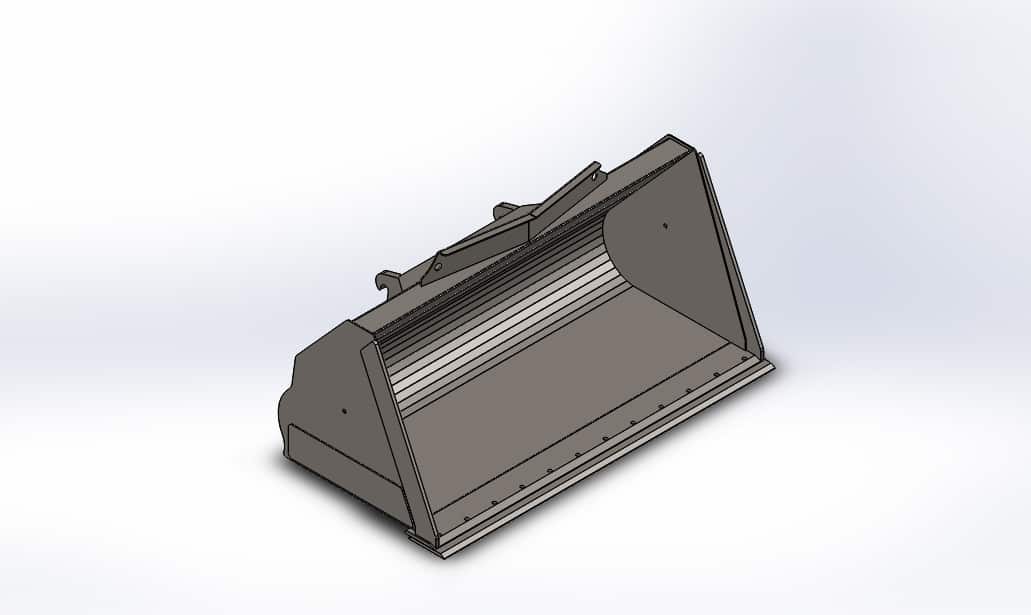
Flat Floor Bucket
The long, flat floor of the bucket makes it the ideal choice for earthmoving applications such as
- Landscaping
- Stripping topsoil
- Grading
Straight Edge Rock Bucket
The best choice for loading easily broken material from banks.
Recommended to be fitted with with bolt on edges or with teeth in combination with segments

Spade Nose Rock Bucket
When fitted with bolt on edges this is the best choice for re-handling of loose materials and aggregates, in short cycle or load and carry operations
When fitted with welded teeth and segments it is the best choice for loading easily broken material from banks
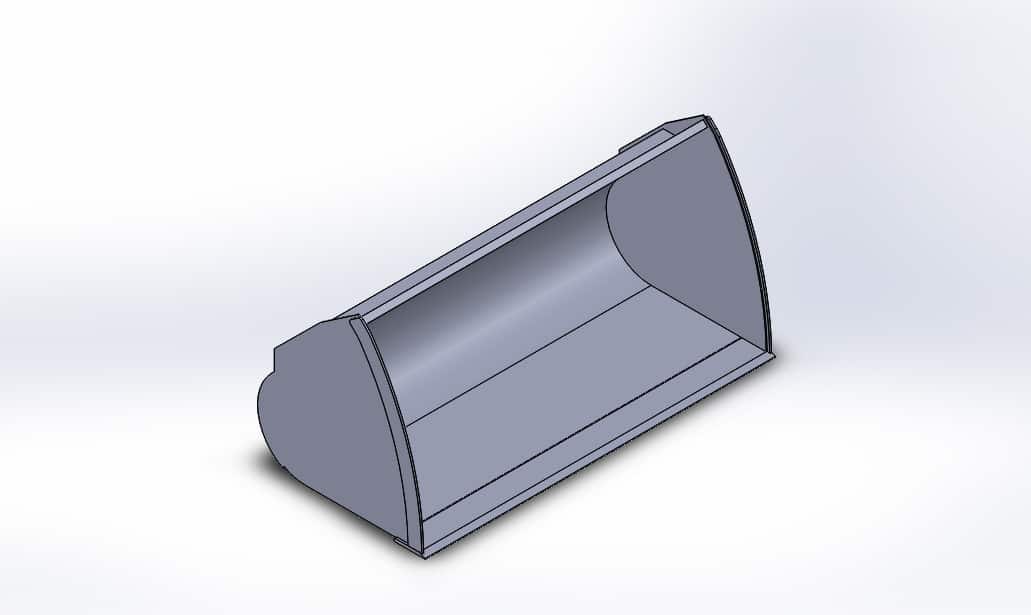
Grain Bucket
The long, flat floor of the bucket makes it the ideal choice for earthmoving applications such as
- Landscaping
- Stripping topsoil
- Grading

Heavy Duty Bucket
The best choice for loading easily broken material from banks.
Recommended to be fitted with with bolt on edges or with teeth in combination with segments
Selecting the correct bucket volume is far more complex than simply choosing the largest bucket available.
The optimum capacity depends on the material density, machine lifting capability, desired fill factor and operating environment.
Key Technical Considerations
- Struck capacity versus heaped capacity
- Material density (kg/m³)
- Bucket width and profile
- Fill factor for different materials
- Required dump height and reach
- Cycle time optimisation
Why does it matter?
Prevents overloading the machine.
Maximises tonnes moved per hour.
Improves fuel efficiency.
Reduces unnecessary wear on the loader and drivetrain.
Correct bucket capacity and geometry maximise productivity whilst keeping the machine within its safe operating limits.
A bucket should be designed around the machine, not the other way round.
An oversized or poorly matched bucket can significantly reduce stability, breakout force and operating safety.
Key Technical Considerations
- Machine operating weight
- Rated operating load
- Static tipping load
- Hydraulic breakout force
- Linkage geometry
- Loader arm specifications
- Hitch compatibility, including Euro, JCB Q-Fit, Volvo, CAT, Merlo and Manitou systems
Why does it matter?
Ensures safe operation.
Maintains the manufacturer’s performance specifications.
Reduces stress on pins, bushes and loader arms.
Delivers the best possible digging and loading performance.
Correct machine matching protects the loader whilst maintaining stability, breakout performance and efficient operation.
Not all buckets are manufactured to the same standard.
Material selection and structural design have a significant influence on durability, maintenance costs and total cost of ownership.
Key Technical Considerations
- Steel grade and tensile strength
- Wear plate thickness
- Reinforced heel plates
- Side wear strips
- Cutting edge specification
- Internal stiffeners and box sections
- Weld quality and fabrication methods
- Replaceable wear components
Why does it matter?
Extends the bucket’s lifespan.
Reduces repairs and downtime.
Maintains structural integrity under heavy loads.
Lowers long-term ownership costs.
Robust construction and replaceable wear protection deliver greater reliability and a longer working life.
Different materials place very different demands on a bucket.
A design that performs exceptionally well with grain may perform poorly with aggregates, waste or sugar beet.
Key Technical Considerations
- Material density
- Abrasiveness
- Moisture content
- Flow characteristics
- Risk of material sticking or bridging
- Visibility requirements
- Side wall profile
- Spill prevention features
Why does it matter?
Improves loading efficiency.
Reduces material loss.
Minimises product contamination.
Increases productivity across every loading cycle.
Matching the bucket design to the material improves filling, retention and discharge performance.
The empty weight of the bucket directly affects how much useful payload the machine can safely lift.
Modern bucket design aims to maximise strength whilst minimising dead weight.
Key Technical Considerations
- Bucket tare weight
- Payload-to-weight ratio
- Centre of gravity
- Structural efficiency
- High-strength steel construction
- Machine axle loading
- Stability throughout the lift cycle
Why does it matter?
Increases legal and safe payload.
Improves machine stability.
Reduces fuel consumption.
Delivers greater tonnes moved per shift.
Improves return on investment by maximising productivity without exceeding machine limits.
A lightweight, structurally efficient bucket maximises payload and productivity whilst reducing stress on the carrier machine.
