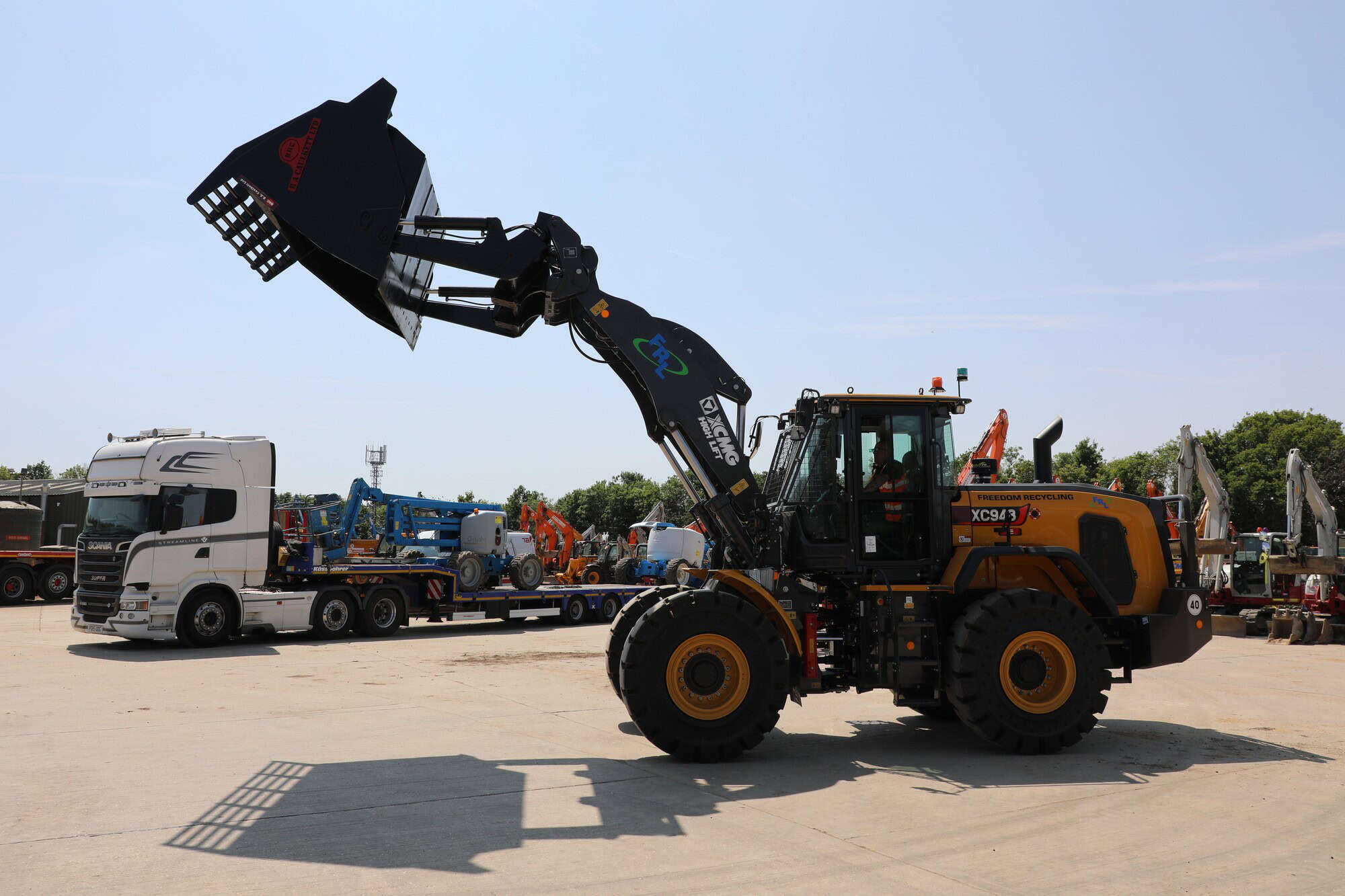
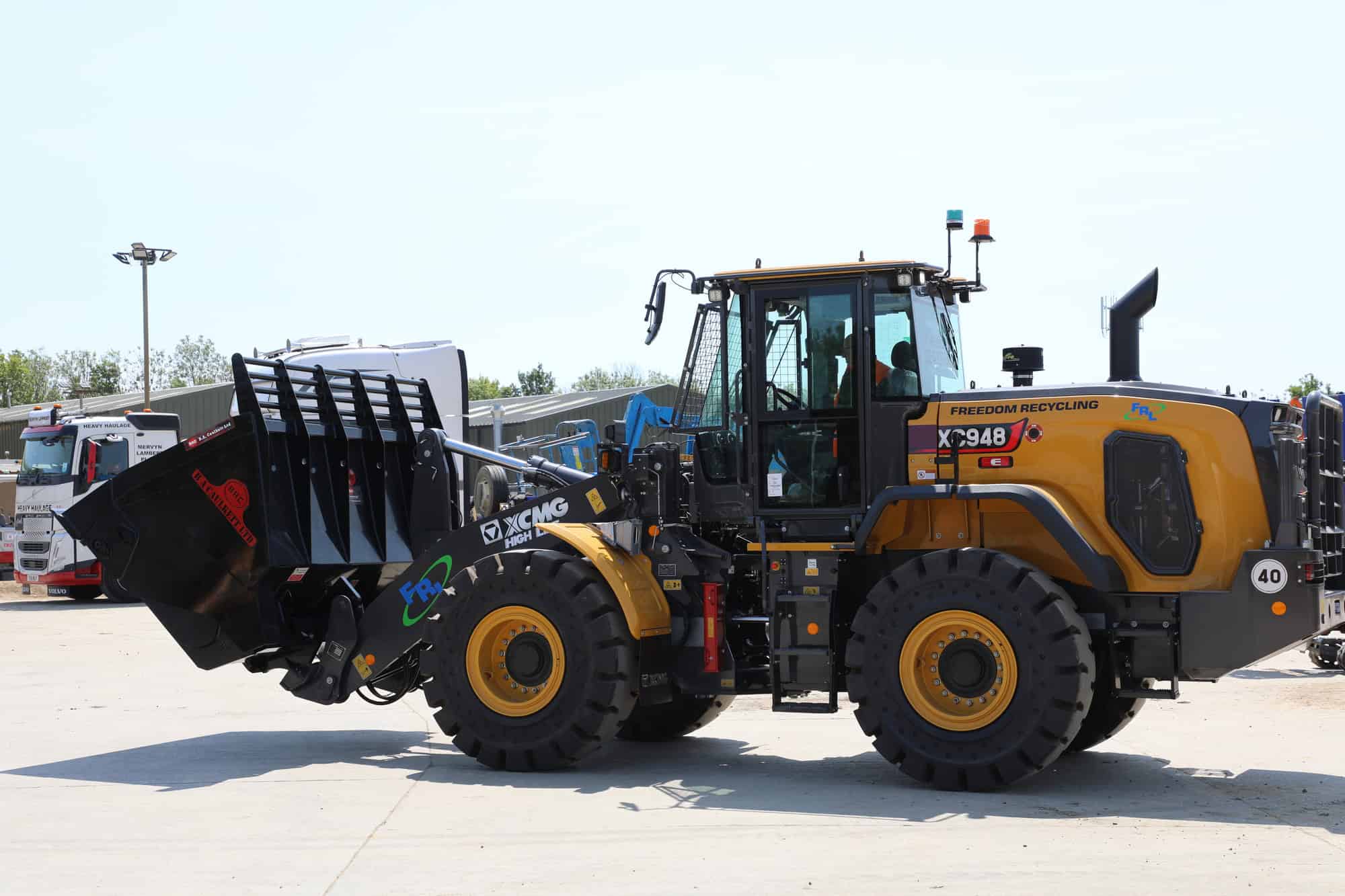
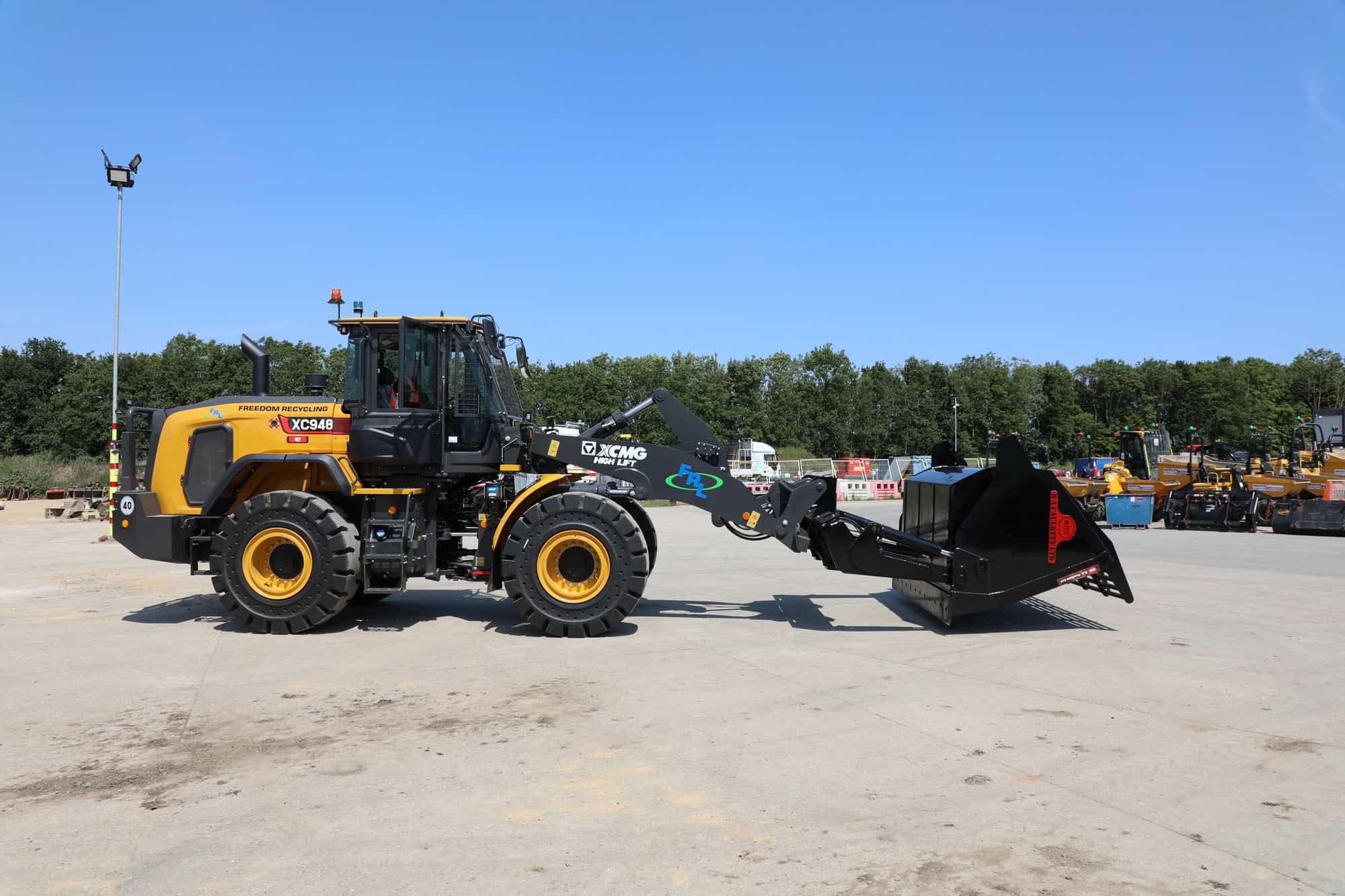
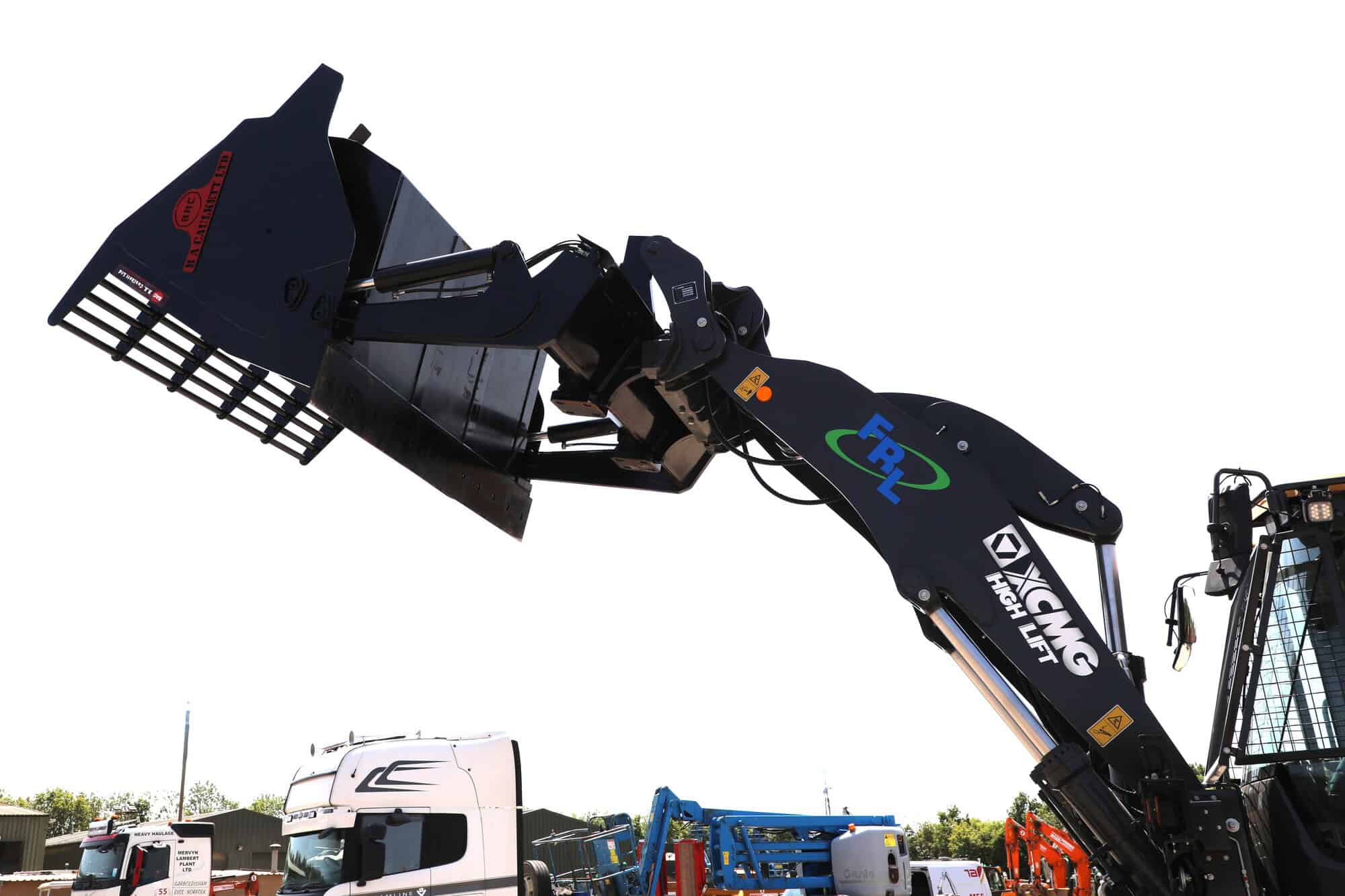
High Tip Bucket on XCMG XC948 Wheel Loader- Key Features
High Tip Bucket Built to Customers Requirements
- Capacity 4.5m3
- Fitted to a XCMG XC 948
- Ultra Plus Specification
- Standard ISO Quick Hitch Mount
- Central Greasing System
- Tubular Spill guard
- Application: Recycling & Waste Disposal Facility
- Steel Hose Covers
Comparative Technical Analysis: High Tip Buckets vs General Purpose Buckets on Wheel Loaders in Waste and Recycling Operations
In waste and recycling sites, the choice of bucket on a wheel loader significantly influences operational productivity, versatility, and site design. Two commonly employed attachments are High Tip Buckets (HTBs) and General Purpose Buckets (GPBs). While both serve essential functions in material handling, their capabilities differ in key areas such as loading speed, vehicle compatibility, operational efficiency, and infrastructure requirements. This article provides a detailed technical comparison of these two bucket types specifically within the context of waste and recycling environments.
1. Design Overview and Intended Application
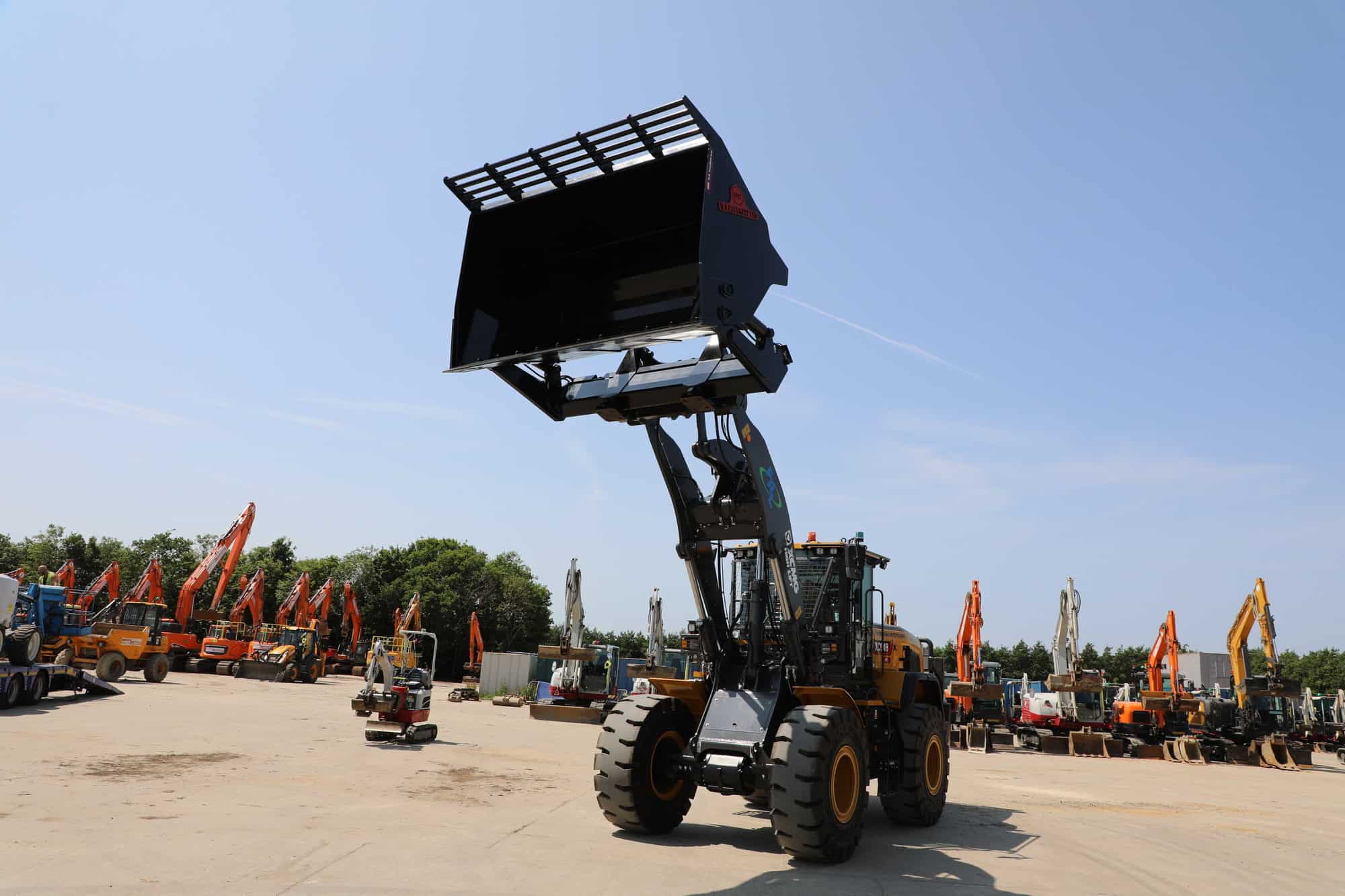
High Tip Buckets are designed with an extended dump reach facilitated by a hydraulic tipping mechanism that enables them to discharge material at a greater height than the standard bucket. They are typically used in applications requiring the loading of high-sided vehicles or hoppers, where standard dump heights are insufficient.
General Purpose Buckets, on the other hand, are the standard bucket configuration supplied with most wheel loaders. They are suited for a variety of tasks including digging, grading, stockpiling, and loading loose materials. Their design is simpler and more robust, with fewer moving parts and less complexity in hydraulic systems.
2. Productivity
High Tip Buckets can significantly improve productivity in waste and recycling sites where materials need to be loaded into tall containers or hoppers. By eliminating the need for ramps or raised platforms, HTBs reduce cycle times and streamline operations. Their ability to deposit material cleanly and directly from height also decreases spillage and secondary handling.
General Purpose Buckets are more versatile across a range of tasks but may limit productivity when dealing with high-sided containers. In such cases, additional time is spent repositioning the machine or creating infrastructure (e.g., ramps) to allow full dumping, reducing throughput.
Verdict: HTBs offer superior productivity for operations requiring elevation while GPBs are better for general site work.
3. Ease of Use and Operator Efficiency
High Tip Buckets are slightly more complex to operate due to the additional hydraulic functions required to control the tipping mechanism. Operators need to be trained to manage the timing and control of the tip function accurately to prevent overloading or spillage. However, once mastered, they offer consistent and reliable performance.
General Purpose Buckets are straightforward, with intuitive controls and fewer hydraulic movements. This simplicity makes them more forgiving and quicker to operate for tasks that do not demand elevated discharge.
Verdict: GPBs win in terms of basic ease of use, though HTBs offer greater efficiency once operators are trained.

4. Speed of Loading
High Tip Buckets enable quicker loading of high-sided vehicles without repositioning the loader or requiring extra height through built infrastructure. The extra time taken for the tip mechanism to activate is often offset by the saved movement and staging time.
General Purpose Buckets can load quicker in situations where the material can be dumped easily at low to moderate heights. However, when loading taller vehicles or hoppers, the need for multiple adjustments or the use of ramps can slow operations.
Verdict: HTBs generally provide faster net loading times in vertical loading scenarios.
5. Compatibility with Vehicles and Hoppers
High Tip Buckets excel in their ability to load a broad range of vehicles including tall walking floor trailers, bulk carriers, and elevated hoppers without additional infrastructure. This flexibility is especially valuable in recycling operations that involve various collection and transport vehicles.
General Purpose Buckets are limited to standard tip heights, which can restrict their use with taller containers unless a loading dock or ramp is constructed.
Verdict: HTBs provide broader compatibility without infrastructure changes.
6. Site Layout and Infrastructure Requirements
High Tip Buckets can simplify site design by reducing the need for purpose-built tipping platforms or ramps. This leads to more efficient space utilisation and lower capital expenditure on fixed infrastructure. Additionally, they offer better mobility and flexibility if the site layout changes or if the loader is used in multiple locations.
General Purpose Buckets may require raised tipping areas or designated ramps to reach the height necessary for certain applications, particularly when loading high-sided trucks or bins. These additions can complicate site logistics and increase site preparation costs.
Verdict: HTBs minimise the need for special tipping areas and offer more flexible site planning.
7. Maintenance and Durability
High Tip Buckets have additional hydraulic cylinders and moving components that introduce more maintenance requirements. Hinge pins, hydraulic hoses, and pivot points are all subject to wear and may require more frequent servicing. However, modern designs use sealed components and hardened materials to improve reliability.
General Purpose Buckets are mechanically simpler, with fewer moving parts and lower long-term maintenance demands. They are also less prone to downtime due to mechanical issues related to complex tip functions.
Verdict: GPBs have an edge in terms of maintenance simplicity and long-term durability.
8. Cost Considerations
High Tip Buckets are more expensive both in terms of upfront capital cost and lifecycle maintenance due to their complexity. However, the return on investment can be justified by gains in productivity and the elimination of supporting infrastructure.
General Purpose Buckets are more economical and cost-effective for basic operations, particularly where material volumes or container heights are not excessive.
Verdict: HTBs require more investment but can offer significant operational cost savings; GPBs are more budget-friendly for simpler use cases.
For waste and recycling sites where materials must regularly be loaded into high-sided vehicles or hoppers, High Tip Buckets provide superior productivity, flexibility, and efficiency despite higher upfront and maintenance costs. They reduce the need for complex site alterations and speed up material handling processes. Conversely, General Purpose Buckets remain a solid choice for general site tasks and operations with standard container heights, offering simplicity and reduced maintenance.
The optimal choice ultimately depends on the site-specific requirements, material volumes, and types of vehicles in use. For operations aiming for versatility and future-proofing, investment in HTBs can offer substantial long-term value.
BAC High Tip Bucket on XCMG Wheel Loaders