

Ultra High Tip Bucket – Key Features
- Tubular Spill Guard
- Reversible bolt on wear edge – as standard
- Heal Plates as standard
- Rollback positions suited to the JCB457S and application
- Powerful hydraulic twin ram system for smooth tipping
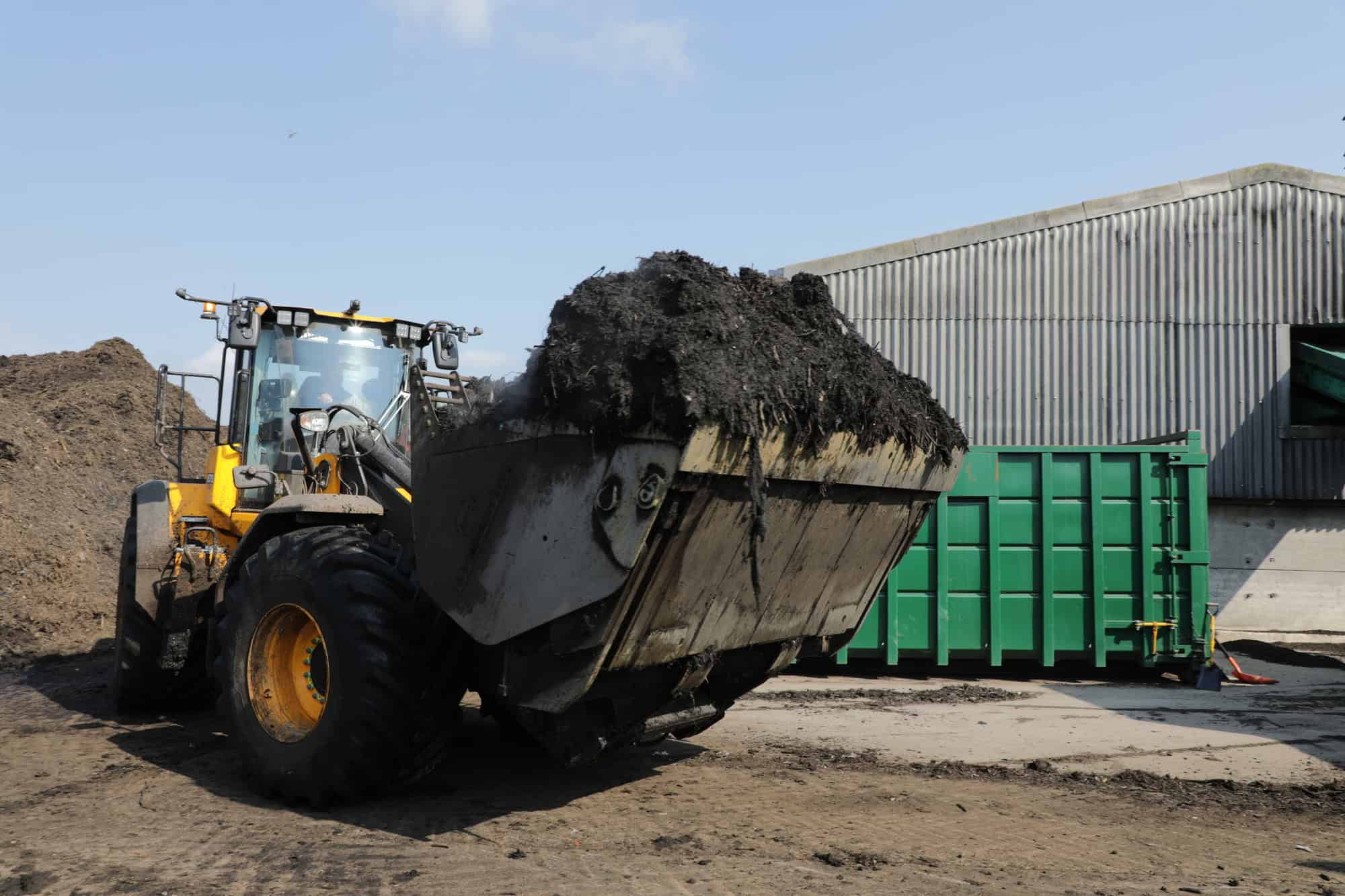
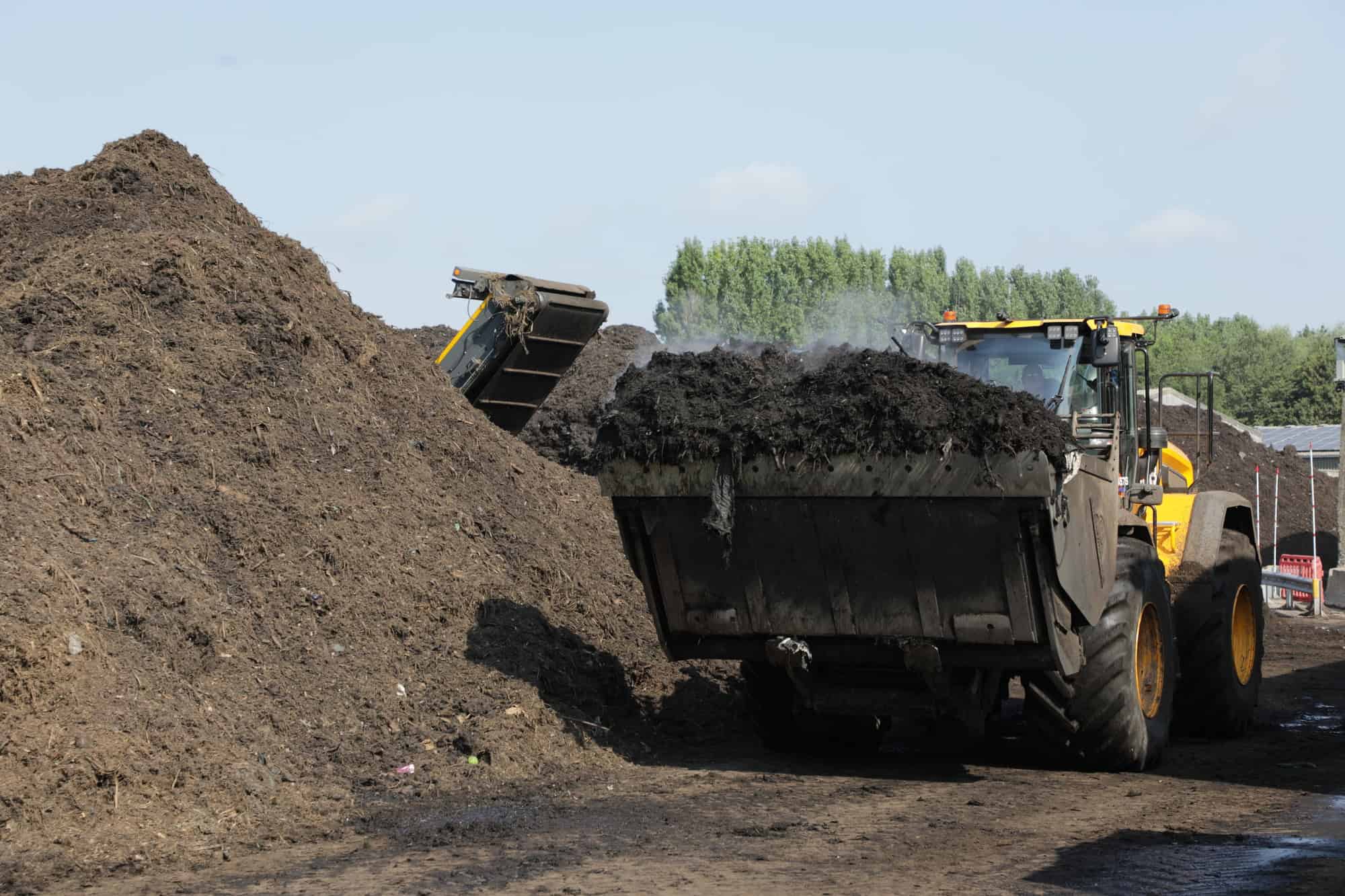
JCB457S Biomass Processing with BAC High Tip Bucket
Wheel loaders are vital machines across construction, recycling, mining, and aggregate industries, where they perform a range of tasks from material handling to stockpiling. Key to their efficiency and longevity is the protection of their working implements—namely, the buckets. High Tip Buckets and General Purpose (GP) Buckets are commonly used attachments that face rigorous demands and exposure to damaging debris.
To safeguard these buckets and optimise operator visibility and safety, various types of screen guards are employed. This article explores the different types of screen guards used for High Tip and GP Buckets on wheel loaders, focusing on their design, function, and suitability for specific applications.
1. Tubular Bar Screen Guards
Construction and Design:
Tubular bar guards consist of evenly spaced steel tubes, typically cylindrical in shape, welded into a robust frame. The tubes are generally made from high-tensile steel, offering durability and resistance to impact.
Applications and Benefits:
- Commonly used in applications where large debris is encountered, such as in demolition or waste handling.
- Offers a good balance between protection and visibility.
- Tubular design allows for deflection of large objects without easily bending or breaking.
Limitations:
- Smaller debris can still pass through the gaps between tubes.
- Slightly heavier than mesh alternatives.
2. Solid Bar Screen Guards
Construction and Design:
These guards utilise flat or square-section bars arranged vertically or horizontally within a solid steel frame. The spacing between bars is usually tighter than in tubular designs.
Applications and Benefits:
- Ideal for environments where fine material containment is crucial.
- Provides a sturdier barrier against projectile debris and can withstand repeated impacts.
Limitations:
- Reduced operator visibility compared to tubular or mesh designs.
- Heavier weight may influence fuel efficiency and hydraulic performance.
3. Solid Screen Guards
Construction and Design:
Solid screens are fabricated from sheet steel or heavy-duty plate with precisely cut openings, or in some cases, left as a full sheet with no openings. They are typically bolted or welded onto the bucket structure.
Applications and Benefits:
- Provides maximum protection from all forms of debris, including dust and small fragments.
- Suitable for extremely abrasive environments like quarrying or metal scrap handling.
Limitations:
- Completely obstructs visibility if no openings are included.
- Poor airflow, which may result in overheating in certain applications.
4. Mesh Screen Guards
Construction and Design:
Mesh guards are made from woven or welded wire mesh, usually steel, mounted onto a rigid frame. The mesh can vary in gauge and aperture size depending on the requirement.
Applications and Benefits:
- Offers excellent visibility for the operator while still providing adequate protection from fine debris.
- Lightweight and easier to install or retrofit.
Limitations:
- Less durable in high-impact environments.
- Can become clogged with material in sticky or wet conditions.
5. Screen Guards with Deflectors
Construction and Design:
This type of screen combines any of the above styles (typically bar or mesh) with an angled deflector plate installed above or around the screen area. The deflector helps redirect falling material away from critical components and operator sightlines.
Applications and Benefits:
- Especially effective in High Tip Buckets where spillage and fall-back is more likely.
- Enhances the life of hydraulic components and cab glazing by reducing direct impact.
Limitations:
- More complex design, which may involve higher manufacturing and maintenance costs.
- May slightly impede material flow depending on deflector positioning.
BAC High Tip Bucket for JCB457S
Choosing the appropriate screen guard for High Tip and GP Buckets is essential to ensure operational safety, maintain visibility, and prolong the service life of equipment. Each screen guard type offers unique benefits and drawbacks, and the selection should be guided by the operating environment, material characteristics, and the specific demands of the application. By understanding the different screen guard options available—tubular bar, solid bar, solid screen, mesh, and deflector-equipped screens—fleet managers and operators can make informed decisions to enhance both performance and safety on site.
