

Easier High Tip Bucket Pin Removal
In the demonstration video we see how the modular design of the threaded pins, when paired with the specialist hydraulic puller from B. A. Caulkett, transforms what is traditionally a labour-intensive maintenance task into a streamlined, efficient operation.
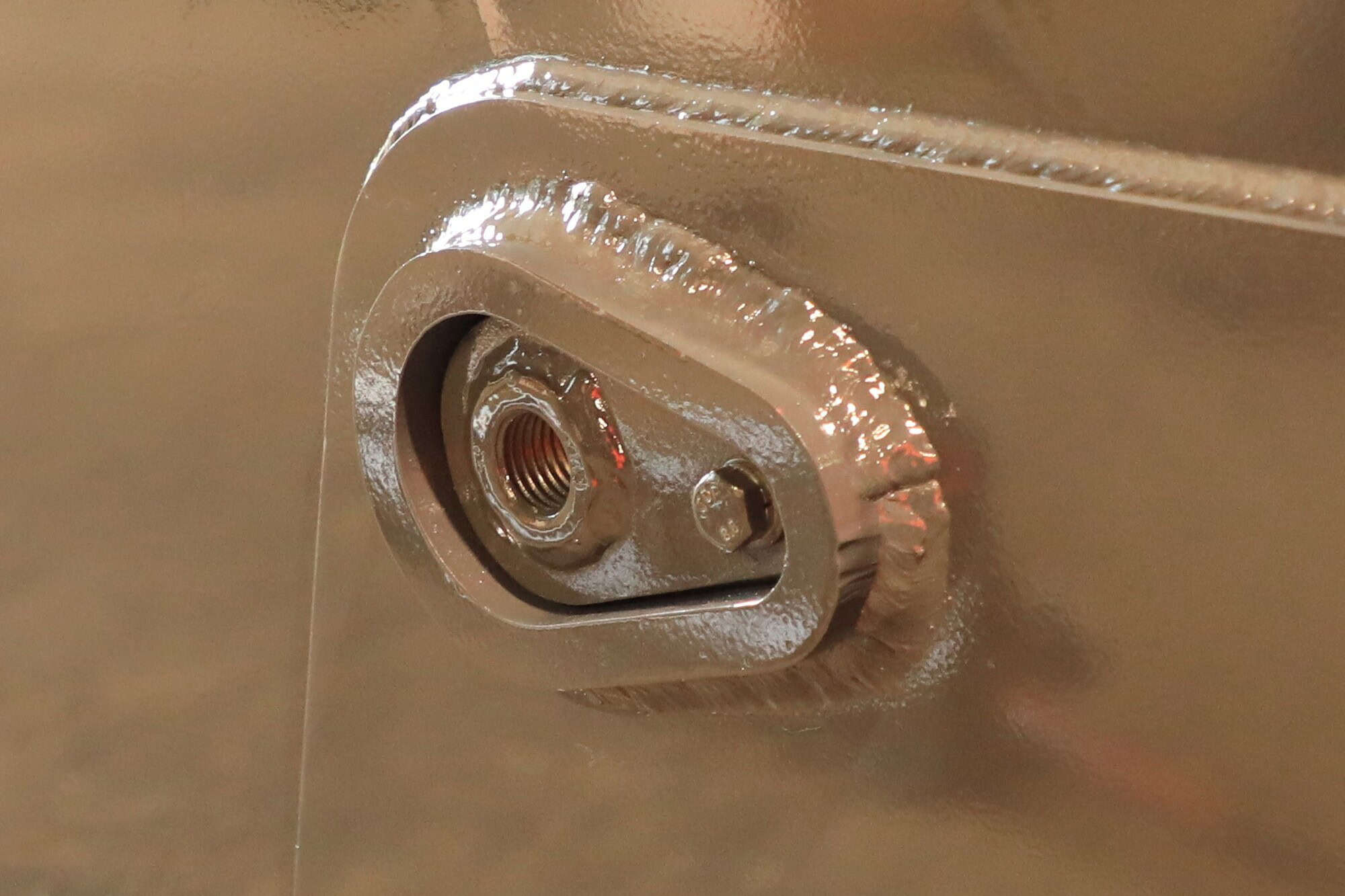
The pinned construction of the high-tip bucket means the key interface points (pivot pins) can be released quickly and cleanly
- No forging,
- No drifting,
- No hammering.
The BAC High Tip Bucket design brings several clear benefits:
- Rapid pin removal
- Reduced risk of damage
- Improved maintenance efficiency
- Enhanced safety
Pin Extraction Technical Overview
Rapid pin removal:
The use of the threaded pins means that once the correct puller is in place, extraction is straightforward and controlled. This greatly reduces downtime compared to conventional solid pins which often require sizeable drifts, heat or impact to extract.
Reduced risk of damage:
By eliminating the need for hammers, heat or improvised extraction methods, there is significantly less risk of damage to the surrounding bushings, housings or structural weldments. Less distortion and better alignment ensure the integrity of the bucket pivot point remains intact.
Enhanced safety:
Using the BAC purpose-designed hydraulic puller maintains a controlled extraction force, reducing the risk of sudden-release hazards or un-controlled movement. Traditional methods involving hammering or forcing pins can present serious safety concerns.
Improved maintenance efficiency:
For site maintenance crews, the threaded pin and hydraulic-puller combination means fewer manual interventions. Maintenance teams can achieve removal, inspection, replacement (if needed) and reassembly in a far shorter timeframe, which gives machines back to work sooner.
Repeatability and reliability:
Threaded pins are designed for repeat servicing cycles. The ease of removal means that periodic inspections, lubrication, or bush replacement become far more practical. This supports a higher level of preventive maintenance over reactive interventions.
Cost savings:
The cumulative savings from fewer manual hours, reduced repair scope (because less collateral damage occurs), and less downtime translate into lower total cost of ownership for the bucket asset.
Application in the High Tip Bucket Build
In the high-tip bucket build from B. A. Caulkett, the use of their proprietary threaded pin design aligns with the broader design philosophy: buckets engineered for heavy duty, high-usage applications while minimising maintenance burden.
By adopting the hydraulic puller method:
- The operator avoids the need to apply heat to release frozen or corroded pins, thereby avoiding metal fatigue or thermal distortion.
- The absence of hammering means no shock loads go into the bucket structure. This is beneficial when dealing with high-tip buckets where structural tolerances are important.
- Because the pins are removed cleanly, the housing remains true, ensuring new pins or bushings can be fitted smoothly and aligned correctly.
Why This Matters for You
For end-users of high-tip buckets (for example, materials-handlers, agricultural users, aggregate operations, recycling or construction sites) the maintenance window is often when the machine is idle . The cost of any additional / unwanted delay is real.
Having a system where pinned components can be removed rapidly, safely and with minimal support tools or workaround methods means:
- More uptime: The bucket spends less time offline.
- Lower indirect costs: Fewer labour hours, less chance of needing specialised equipment to free stuck pins.
- Improved longevity: Less wear and distortion in the pivot area means parts last longer and retain proper alignment.
- Simplified planning: Maintenance schedules become more predictable because the removal process is repeatable and less dependent on “will it come out or not” variables.
