

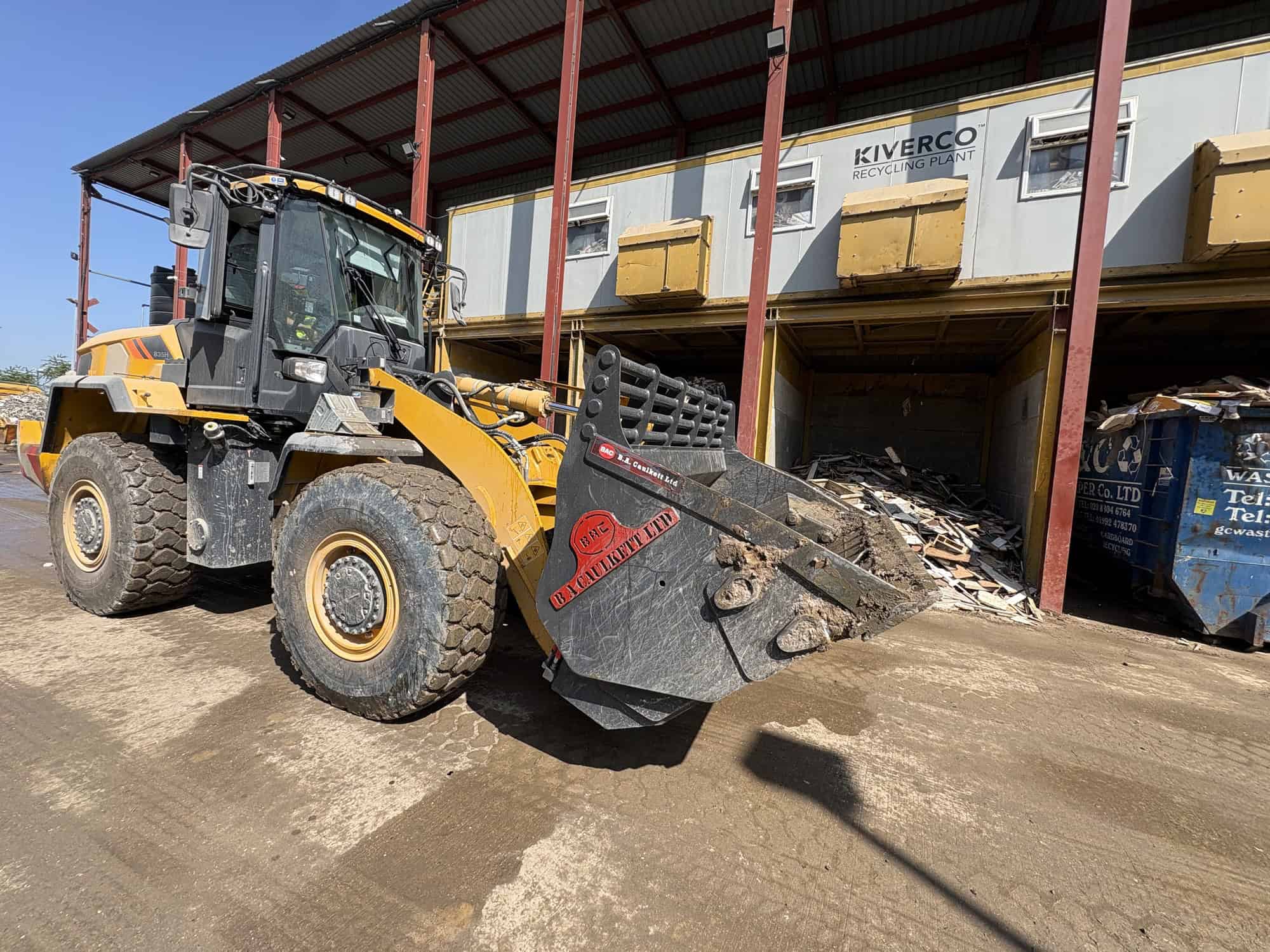
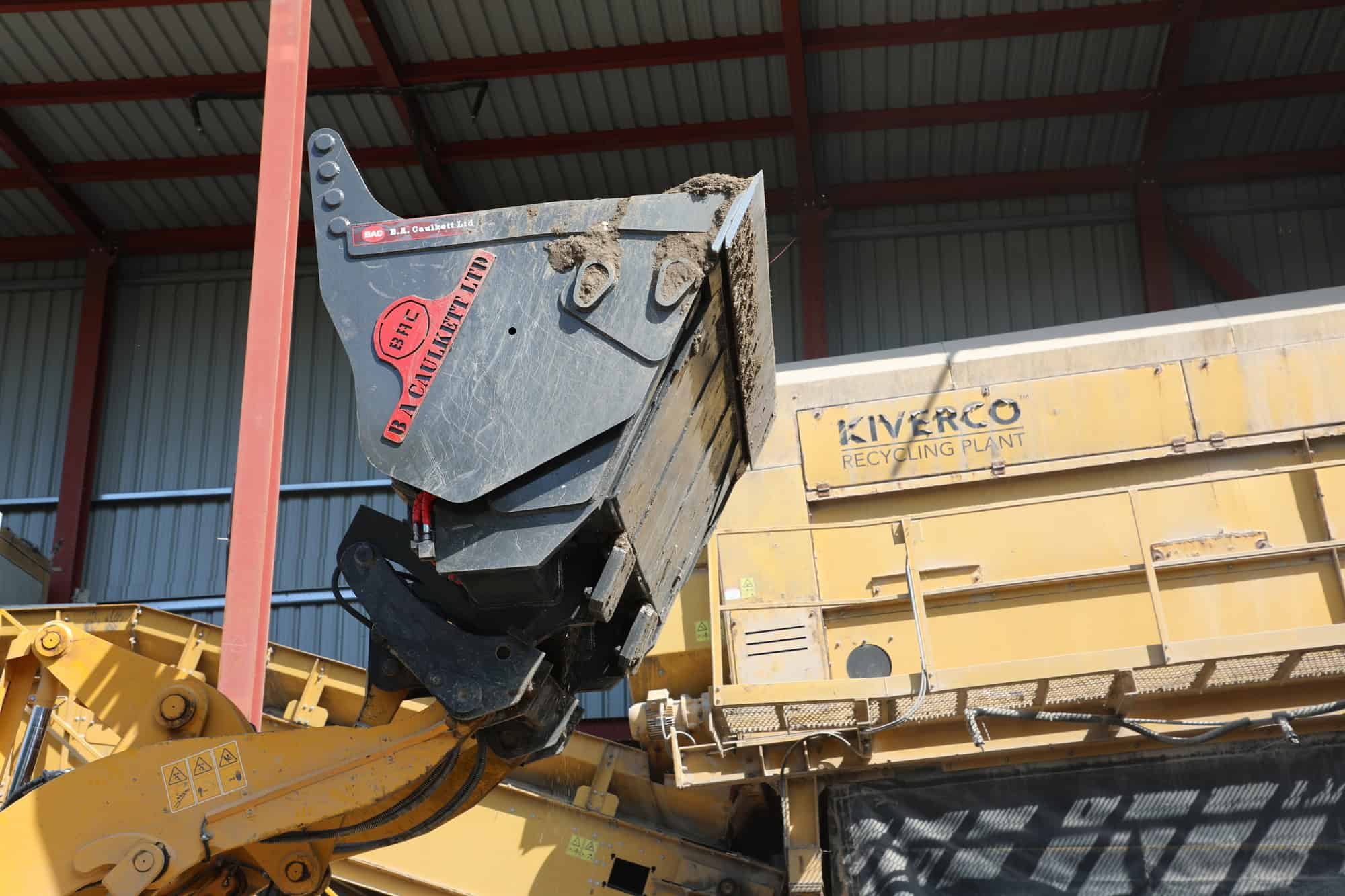
BAC LiuGong 835H High Tip Bucket – Key Features
High Tip Bucket Built to for recycling site operating requirements
- BAC Ultra High Tip 2.3m3 Bucket
- Steel Bar Spill Guard
- Auto Greasing System
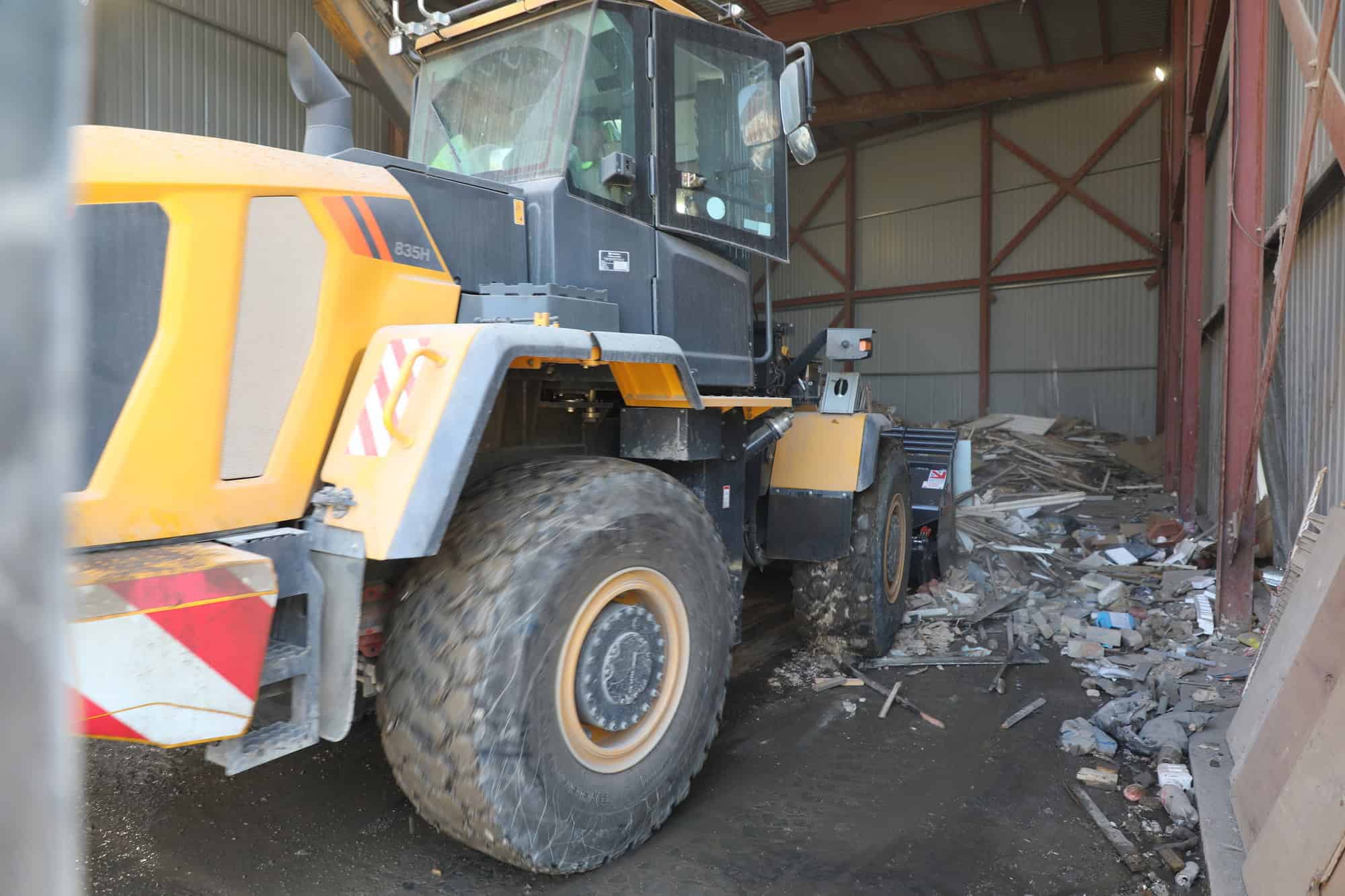
- Operating on a mixed waste recycling site
Design and Technical Considerations for High Tip Buckets in the Waste and Recycling Sector
High tip buckets are indispensable tools in the waste and recycling sector, particularly for operations that require the efficient loading and tipping of materials into high-sided vehicles and hoppers. Manufacturers like BA Caulkett specialise in producing high-quality high tip buckets that are robust, efficient, and tailored to meet the demanding needs of waste management and recycling operations. The design and technical considerations for such buckets are multifaceted and must be rigorously addressed to ensure safety, productivity, and longevity.
1. Structural Integrity and Material Selection
The structural integrity of a high tip bucket is paramount given the rigorous conditions under which it operates. Waste and recycling environments are often harsh, with the presence of abrasive and heavy materials. Key design considerations include:
-
High-tensile steel: The bucket body should be constructed from high-tensile steel or wear-resistant materials such as Hardox or equivalent grades. This ensures resistance to denting, warping, or premature wear.
-
Reinforcement: Additional bracing and reinforcement ribs on the bucket structure are essential to withstand torsional forces and dynamic impacts.
-
Weld quality: All structural welds must be of the highest standard, with continuous fillet welding used in stress-prone zones to prevent fatigue and cracking.
2. Load Capacity and Volume Optimisation
In the waste and recycling sector, material density can vary significantly—from light plastics to dense rubble. Therefore:
-
Customised volume sizes: High tip buckets should be available in a range of capacities to suit different machine sizes and material types, ensuring optimal cycle times.
-
Weight distribution: The design must ensure even load distribution across the bucket to reduce stress on hinge pins and hydraulic components.
-
Centre of gravity: A low and rearward centre of gravity during loading improves machine stability and operator safety.
3. Hydraulic System Design
The hydraulic mechanism that powers the tipping action is a critical component:
-
Cylinder size and positioning: Hydraulic cylinders must be appropriately sized to provide sufficient lifting force even when the bucket is fully loaded. Their positioning should offer maximum mechanical advantage.
-
Hydraulic flow requirements: Compatibility with the host machine’s hydraulic flow and pressure is essential to ensure smooth operation without system strain.
-
Hose routing and protection: Hydraulic hoses must be well-routed and shielded against debris and potential snagging, with protective sleeving or guards.
4. Tipping Mechanism and Height
The defining feature of high tip buckets is their extended tipping height, allowing them to discharge material into tall containers:
-
Scissor lift or forward tipping designs: The mechanism must be engineered for height gain without compromising stability.
-
Tipping angle: An optimal tipping angle (typically 90° or more) ensures complete emptying of sticky or light materials.
-
Cycle time efficiency: Fast tipping and reset cycles are vital for maintaining productivity on busy sites.
5. Attachment Interface and Compatibility
High tip buckets must seamlessly integrate with the host machine, be it a wheel loader or telehandler:
-
Mounting brackets: These should match the quick-hitch or direct mount system of the machine. Options for bolt-on brackets increase versatility.
-
Weight consideration: The bucket’s dead weight must not overly tax the host machine’s lifting capacity.
-
Pin-on vs. quick hitch: The attachment method should support rapid interchangeability without compromising on strength or rigidity.
6. Safety Features and Compliance
Safety is a crucial factor in any equipment design, especially in environments with human and vehicular traffic:
-
Load-holding valves: These are essential to prevent uncontrolled lowering in the event of hydraulic failure.
-
Overload indicators: Some high-end models may incorporate pressure sensors to alert operators to potential overloading.
-
CE marking and EN standards: All designs must adhere to UK and European machinery safety regulations, including EN 474 and ISO standards.
7. Ease of Maintenance and Durability
Long-term performance and ease of service are essential for reducing downtime and total cost of ownership:
-
Replaceable wear parts: Bolt-on wear edges, side cutters, and bushes enable field maintenance and prolong the bucket’s lifespan.
-
Grease points: Easy-access grease nipples and centralised greasing systems simplify daily maintenance routines.
-
Surface treatment: Corrosion-resistant paint or galvanised finishes protect against moisture and chemical exposure.
8. Environmental and Operational Efficiency
With increasing emphasis on sustainability, bucket designs are now focusing on operational efficiency:
-
Optimised shape for fill factor: Curved inner surfaces and appropriate tapering promote complete filling and fast emptying.
-
Minimising spillage: High side walls and spill guards help reduce material loss during transport and tipping.
-
Noise reduction: Strategic use of rubber buffers or anti-vibration features can reduce noise, improving operator comfort and environmental compliance.
High Tip Buckets For Waste & Recycling Sites
High tip buckets serve a critical function in the waste and recycling sector, facilitating safe, efficient, and high-capacity handling of diverse materials. To meet the rigorous demands of this sector, manufacturers like BA Caulkett must incorporate a blend of advanced engineering, durable materials, and thoughtful design. From hydraulic systems to structural resilience and safety compliance, every aspect of a high tip bucket must be meticulously crafted to maximise productivity and minimise downtime in one of the most demanding industries.
For more information on high tip bucket configurations, specifications, and customisation options, visit www.bacaulkett.com.
