

High Tip Bucket on Hyundai 955A
- Improve Access on High Sided Containers and Trailers
- Avoid costly Site Modifications by Using High Reach Capability
- High Tip Bucket provides accurate load discharge
- With a high tip bucket you can pile higher and reach further
- BAC Buckets For Hyundai HL 930, HL 940, HL 955, HL 960, HL 970, HL 975, HL 980, HL 985
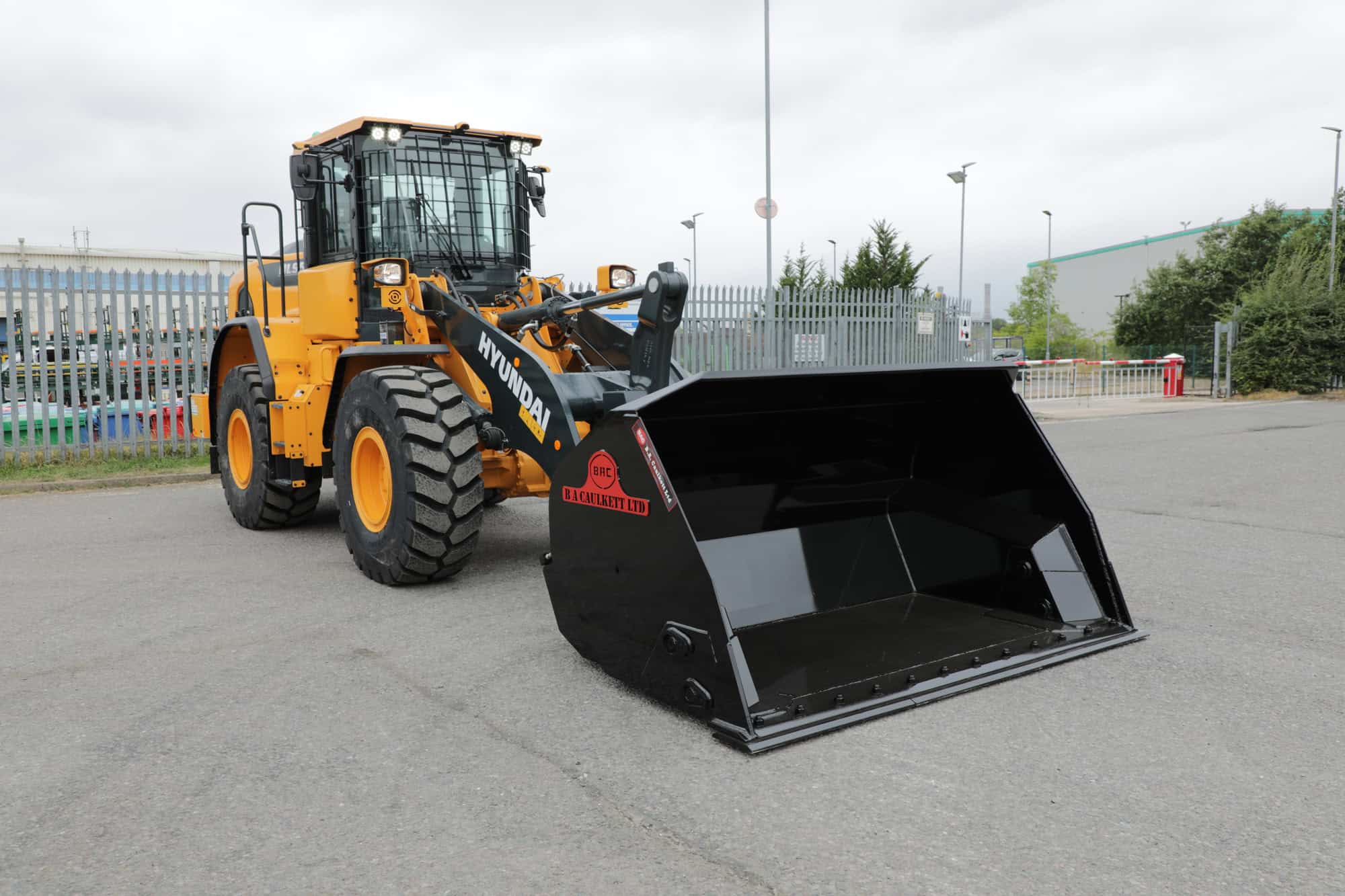
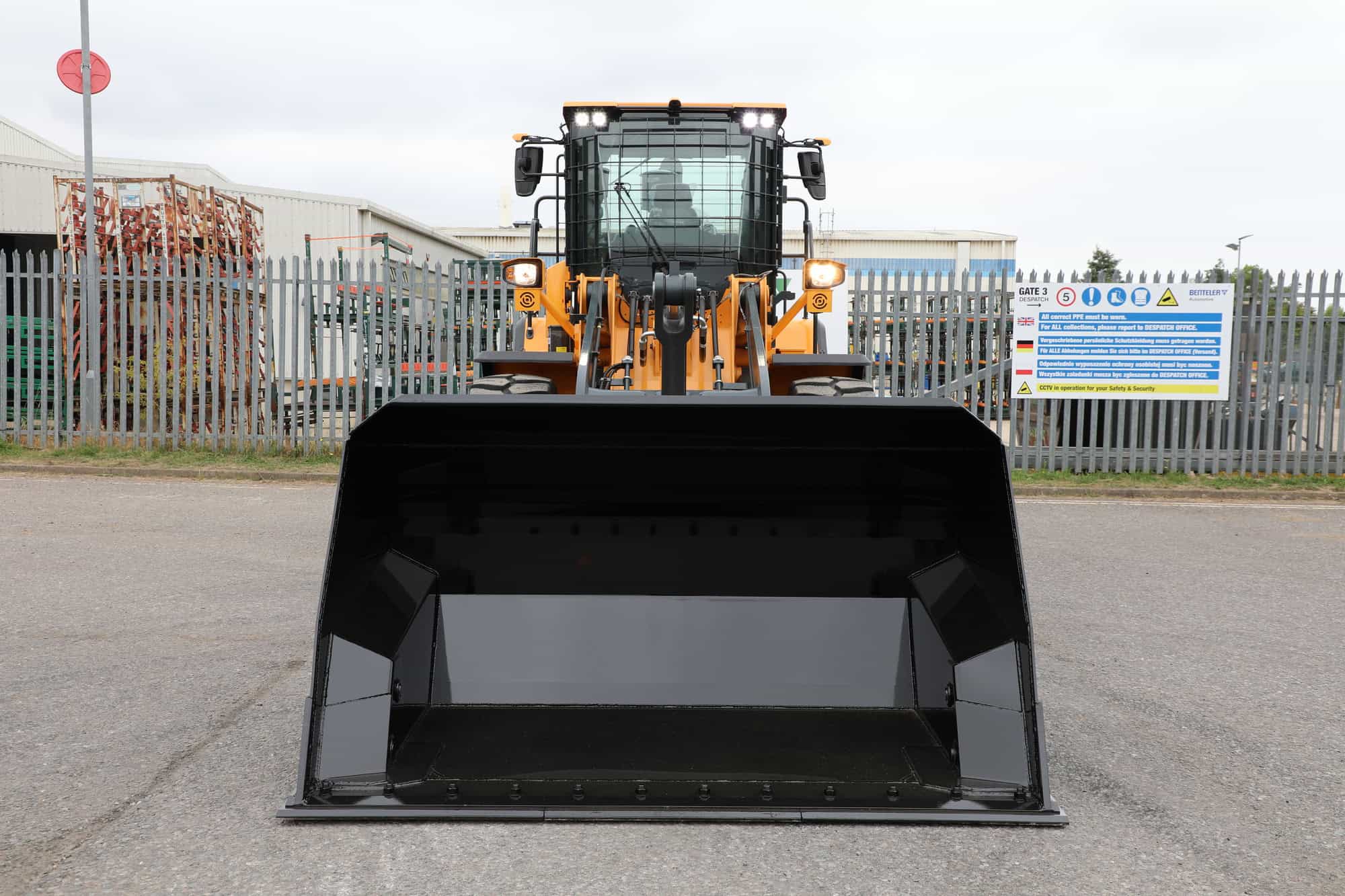
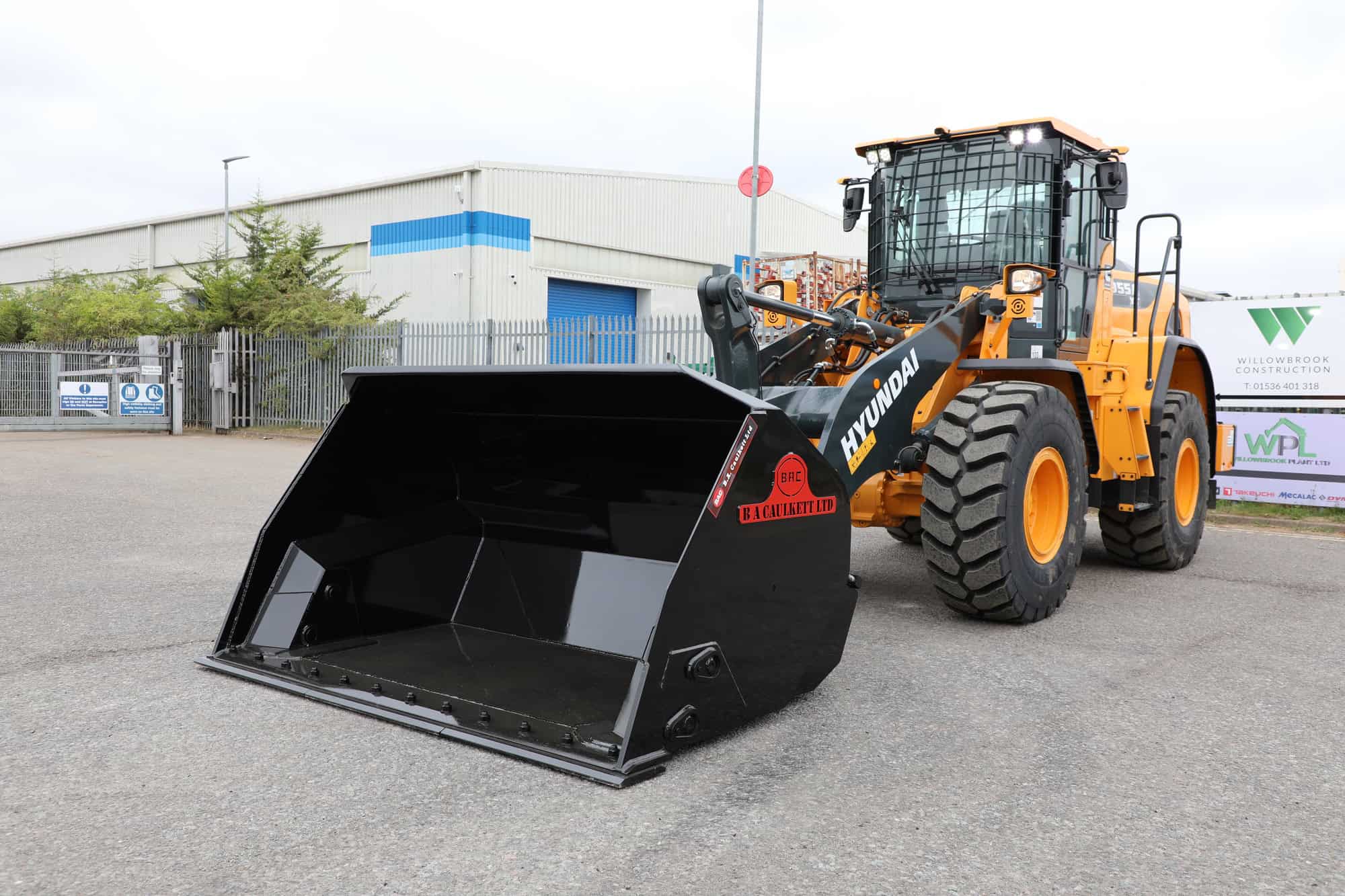
Hyundai High Tip Buckets
When using a high tip bucket on a Hyundai Wheel Loader within the construction sector, there are several specific factors that relate both to the individual loader models (HL930, HL940, HL955, HL960, HL970, HL975, HL980, HL985) and to general operating considerations in a construction context.
The use of a high tip bucket significantly affects a loader’s performance, safety parameters, and operational flexibility. Below is a comprehensive overview structured into two sections: model-specific considerations and construction sector operating factors.
Model-Specific Factors: Hyundai HL930 to HL985
-
Rated Operating Capacity and Tipping Load
Each model has a different operating weight and tipping load capacity. The use of a high tip bucket increases the centre of gravity, potentially reducing tipping stability. For example:-
HL930/HL940: Mid-sized loaders with more limited tipping loads, making them more sensitive to the height and weight of the attachment.
-
HL975/HL985: Larger machines that can accommodate heavier loads and taller attachments more safely.
-
-
Hydraulic System Performance
The efficiency of the hydraulic system, including cycle time and breakout force, varies by model. High tip buckets demand stronger lift and dump capabilities:-
HL955/HL960: Well-balanced in terms of hydraulic performance for moderately heavy material handling.
-
HL980/HL985: Designed for high-production applications; better suited to work with high tip buckets under demanding conditions.
-
-
Boom Geometry and Bucket Pin Height
Boom design differs slightly across models. The height at which the bucket pins reach their maximum elevation affects dump clearance:-
High tip buckets increase vertical reach, but loaders like the HL970–HL985 have better reach from the base machine, making them more effective in applications like truck loading.
-
-
Counterweight and Stability
Higher capacity models often come with heavier counterweights or optional extended counterweights, which help offset the additional forward weight and height of high tip buckets. Stability management is crucial, especially for the HL930–HL955. -
Axle and Tyre Configuration
The load bearing on axles, particularly the rear, is affected by the additional leverage from high tip buckets. Larger models (e.g., HL980, HL985) have more robust axle designs and tyre options that reduce wear and increase traction under high-load operations. -
Machine Application Compatibility
Not all models are equally suited for the same environments:-
HL930–HL955: More commonly used in urban or mid-scale projects.
-
HL970–HL985: Preferable for quarrying, mining, and large-scale infrastructure works where large volumes and high dump heights are standard.
-
Operating Factors in the Construction Sector
When integrating a high tip bucket-equipped wheel loader into a construction project, consider the following:
-
Site Conditions
Uneven terrain, soft ground, or restricted spaces can impact machine stability and maneuverability. High tip buckets raise the centre of gravity, so operations on inclines or soft subgrades require extra caution. -
Load Type and Material Density
High tip buckets are often used for lighter materials like mulch, woodchips, or loose aggregates. Overloading dense materials like wet clay or gravel may exceed safe operational limits, particularly in smaller loaders. -
Dump Height Requirements
These buckets are specifically chosen to reach over high-sided trucks or hoppers. Assess dump clearance and approach angles to avoid misalignment or spillage. -
Cycle Efficiency and Fuel Economy
Additional hydraulic lift for high tip operation can increase cycle times and fuel consumption. Operators should optimise loading patterns to maintain efficiency. -
Visibility and Operator Safety
High tip attachments may obstruct forward visibility during the approach or dumping phases. Machines with advanced cab visibility features (rear-view cameras, proximity sensors) should be preferred, especially in tight construction zones. -
Attachment Integration and Controls
Ensure that the loader’s control system supports the high tip bucket hydraulics (third function hydraulics may be required). Modern models like the HL960 upwards offer better integration through their standard electro-hydraulic control systems. -
Maintenance and Wear Management
High tip buckets experience additional hinge and pivot wear due to the extended range of motion. Greasing schedules and wear part inspections should be adjusted accordingly. Use reinforced pins and bushings for durability. -
Legal and Transport Considerations
The modified height and dimensions of a loader with a high tip bucket may affect transport compliance. Always verify the machine’s transport configuration before relocation. -
Training and Operator Familiarity
Operator training is critical, particularly for managing tipping risk, hydraulic response, and awareness of machine limitations. Skilled handling helps to maximise productivity and safety. -
Compatibility with Other Site Equipment
The loader’s cycle times and tipping capabilities should be synchronised with dump truck sizes and onsite workflow to prevent bottlenecks.
Hyundai Wheel Loader High Tip Buckets Matching The Application
Using a high tip bucket on Hyundai HL series wheel loaders introduces both enhanced capability and additional complexity. Model-specific differences—ranging from hydraulic strength to stability and size—must be matched to the demands of the construction application. Operating with these attachments requires thorough attention to safety, machine limits, material types, and site logistics. Larger models such as the HL970 to HL985 offer superior support for high tip buckets in high-volume applications, whereas smaller models may require closer attention to balance and load management.
