

High Tip Ultra Bucket – Key Features
Material usage
- Suitable for free flowing materials up to 800kgm3
Rams
- Horizontal Rams: Positioned parallel to the bucket frame. This design prioritises faster tipping action and higher capacity for lightweight materials.
Bucket construction
- Curved front for improved load retention
- Up to 1.085m Extended Tipping
- Bucket Geometry Designed for Hoppers and High Sided Vehicles
Hydraulics
- Cross line relief valve
- All hoses excluding fittings

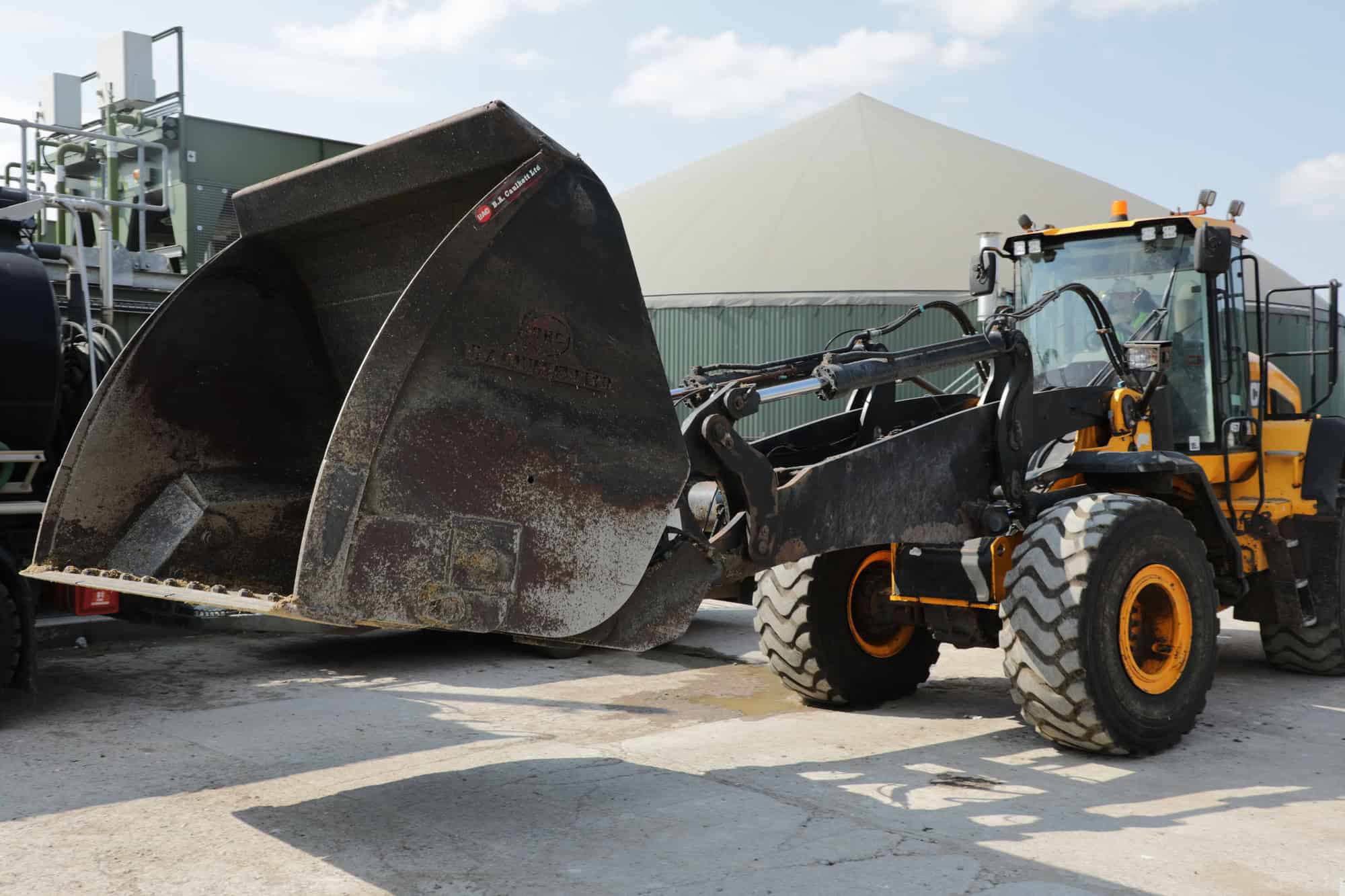
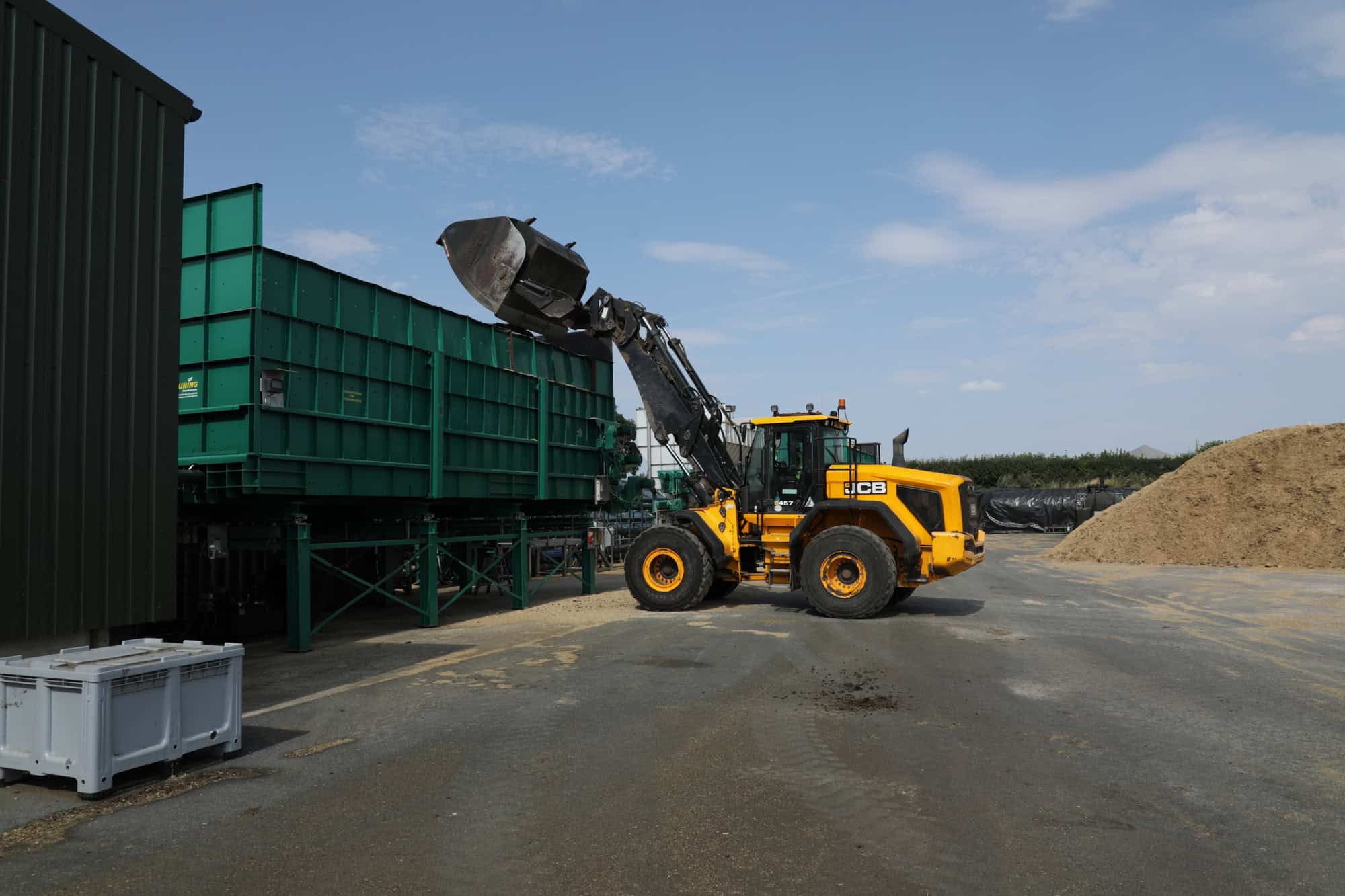
Liebherr Wheel Loaders and High Tip Buckets
When operating a Liebherr Wheel Loader equipped with a high tip bucket in an Anaerobic Digestion (AD) Plant, there are several machine-specific and environment-specific factors that must be taken into account to ensure operational efficiency, safety, and machine longevity.
Below is a comprehensive breakdown tailored to the specific Liebherr L-series models (L514, L518, L526, L538, L546, L550, L556, L576, L580, and L586) and the unique challenges presented by an anaerobic digestion plant setting
1. Model-Specific Considerations with High Tip Buckets
Each model of Liebherr Wheel Loader has different operating capacities and configurations. When outfitted with a high tip bucket, the following considerations are essential:
L514, L518 (Compact Loaders):
- Lower Operating Weight and Tipping Load: These compact loaders are ideal for tighter spaces in AD plants but have reduced lifting capacity. Overloading the high tip bucket can cause instability.
- Hydraulic Output: Ensure hydraulic pressure and flow are sufficient for smooth and efficient operation of the high tip mechanism.
- Manoeuvrability: Excellent for confined areas like feed hoppers or under roof structures.
L526, L538 (Medium-Range Loaders):
- Versatile for Mid-Size Plants: Suitable for handling moderate volumes of feedstock or digestate.
- Balance and Stability: The high tip bucket changes the centre of gravity; counterweights may need to be adjusted to prevent tipping.
- Visibility: Operators should take extra care with overhead tipping in low-ceiling areas typical of AD facilities.
L546, L550, L556 (Higher Capacity Loaders):
- Improved Load Handling: More suitable for handling larger volumes of silage, feedstock or digestate.
- Articulation and Oscillation: Ensure articulation joints and oscillating axles are well maintained for terrain adaptability within the plant.
- Tyre Considerations: Use heavy-duty, self-cleaning tyres or foam-filled options to deal with sharp debris or bio-waste.
L576, L580, L586 (Heavy-Duty Loaders):
- High Productivity Requirements: Best suited for large-scale AD operations with substantial material throughput.
- Bucket Cycle Time: Important when dealing with time-sensitive materials (e.g., food waste).
- Machine Height: Important to ensure the loader can clear high-walled storage bunkers or containers, even with the added height of the high tip bucket.
- Fuel Efficiency: Liebherr’s hydrostatic driveline can provide fuel savings—beneficial in operations running multiple shifts.
2. Operating Factors in Anaerobic Digestion Plant Environments
The AD environment is highly specific and presents unique challenges for wheel loader operations:
Material Handling
-
Sticky, Wet Materials: Food waste, sludge, and silage can adhere to the high tip bucket, requiring frequent cleaning or non-stick coatings.
-
Corrosive Substances: Digestate and biowaste can be acidic. Select a bucket with reinforced edges or corrosion-resistant liners.
-
Dust & Odour Management: Operating in enclosed spaces requires ventilation and cab filtration systems for operator comfort and health.
Environmental Conditions
-
High Moisture & Mud: Leads to slippery conditions; ensure loaders are fitted with proper traction aids or mudguards.
-
Confined Workspaces: Requires high manoeuvrability, smaller turning radii, and precise bucket control.
-
Temperature Extremes: May affect hydraulic fluid performance. Use recommended viscosity oils for cold or hot weather.
Maintenance and Uptime
- Frequent Cleaning: High tip buckets may require more maintenance due to exposure to sticky and corrosive materials.
- Preventive Inspections: Focus on the bucket linkage, hydraulic cylinders, and pivot points as they are under more stress with high tip mechanisms.
- Lubrication Needs: Increased due to frequent articulation under load and possible material ingress.
3. Operational Best Practices
- Load Uniformly: Prevents overstraining one side of the bucket linkage.
- Avoid Over-Tipping: Use automated limiters or operator vigilance to avoid collisions with overhead obstructions or overbalancing.
- Bucket Positioning: Use assistive technology (e.g., load assist) for consistent material drop placement and efficiency.
4. Efficiency and Productivity Enhancements
- Operator Training: Skilled operators can better judge tipping heights, balance loads, and navigate tight plant areas.
- Attachment Versatility: Quick coupler systems can help switch between high tip buckets and other attachments like silage forks or grapples.
Liebherr 546 High Tip Bucket and AD Plants
Using a high tip bucket on Liebherr Wheel Loaders within an anaerobic digestion plant requires careful consideration of the loader model’s capabilities, the nature of the AD environment, and specific maintenance and safety protocols.
Each loader from the L514 to the L586 series offers different strengths—selecting the appropriate machine and configuring it for corrosion resistance, operator safety, and efficient material handling is crucial to optimal performance in these demanding operations.
